As businesses increasingly rely on web applications for customer engagement, transactions, communication, and operations, security has become a critical requirement rather than an optional feature. A single security vulnerability can result in data breaches, financial losses, service disruptions, and reputational damage.
Web application security is a continuous process that involves secure development, infrastructure protection, monitoring, testing, and maintenance. Rather than relying on a single security measure, organizations should implement multiple layers of protection throughout the application lifecycle.
Why Web Application Security Matters
Modern web applications process sensitive information such as customer details, payment information, business records, and confidential data. Attackers often target web applications through vulnerabilities such as SQL injection, cross-site scripting (XSS), broken authentication, insecure APIs, and misconfigured servers.
Implementing security best practices can help businesses reduce risks and improve the overall reliability of their digital platforms.
1. Validate And Sanitize User Input
One of the most important security practices is validating and sanitizing all user input. Data submitted through forms, APIs, URLs, cookies, and external integrations should never be trusted automatically.
Proper input validation can help prevent common attacks such as SQL injection, command injection, and cross-site scripting by ensuring that only expected data formats are accepted.
2. Implement Strong Authentication
Authentication controls who can access an application. Weak authentication mechanisms can expose user accounts and sensitive business information.
Businesses should consider strong password policies, multi-factor authentication (MFA), secure password storage, account lockout mechanisms, and modern authentication frameworks to improve account security.
3. Enforce Proper Authorization
Authentication verifies identity, while authorization determines what users can access.
Applications should implement role-based or permission-based access controls to ensure users can only access resources relevant to their roles. Authorization checks should always be performed on the server side rather than relying solely on client-side controls.
4. Use HTTPS And Encrypt Sensitive Data
Data should be protected both during transmission and while stored.
HTTPS using modern TLS protocols helps secure communication between users and servers. Sensitive information such as passwords, personal data, payment details, and business records should also be encrypted where appropriate.
5. Protect Against Common Web Attacks
Applications should be designed to mitigate common threats including SQL injection, Cross-Site Scripting (XSS), Cross-Site Request Forgery (CSRF), session hijacking, and insecure direct object references.
Developers should follow secure coding standards and regularly review applications against recognized security frameworks such as the OWASP Top 10.
6. Keep Dependencies And Software Updated
Many security incidents occur because organizations continue using outdated software, libraries, plugins, or frameworks with known vulnerabilities.
Regular updates, patch management, dependency monitoring, and vulnerability scanning can help reduce exposure to known security risks.
7. Implement Security Testing Throughout Development
Security should be integrated into the software development lifecycle rather than treated as a final testing activity.
Organizations can use static application security testing (SAST), dynamic application security testing (DAST), penetration testing, dependency scanning, and code reviews to identify vulnerabilities before deployment.
8. Monitor Logs And Security Events
Logging and monitoring help organizations detect suspicious activities, unauthorized access attempts, unusual behavior, and potential security incidents.
Applications should maintain meaningful audit logs and generate alerts for critical events such as repeated login failures, privilege changes, unusual API activity, and security violations.
9. Apply The Principle Of Least Privilege
Users, administrators, APIs, services, and databases should only have access to the resources required for their specific responsibilities.
Limiting permissions reduces the potential impact of compromised accounts and helps prevent unauthorized access to sensitive systems and data.
10. Use Web Application Firewalls And Security Layers
A Web Application Firewall (WAF) can help filter malicious traffic and provide an additional layer of protection against common attacks.
Security should be implemented using a defense-in-depth strategy that combines secure coding, authentication, authorization, monitoring, firewalls, vulnerability management, and incident response procedures.
Security Is An Ongoing Process
Web application security does not end when an application is launched. New vulnerabilities, software updates, infrastructure changes, and evolving attack techniques require continuous attention.
Regular security assessments, patch management, monitoring, testing, and employee awareness can help maintain a strong security posture over time.
How Solace Infotech Can Help
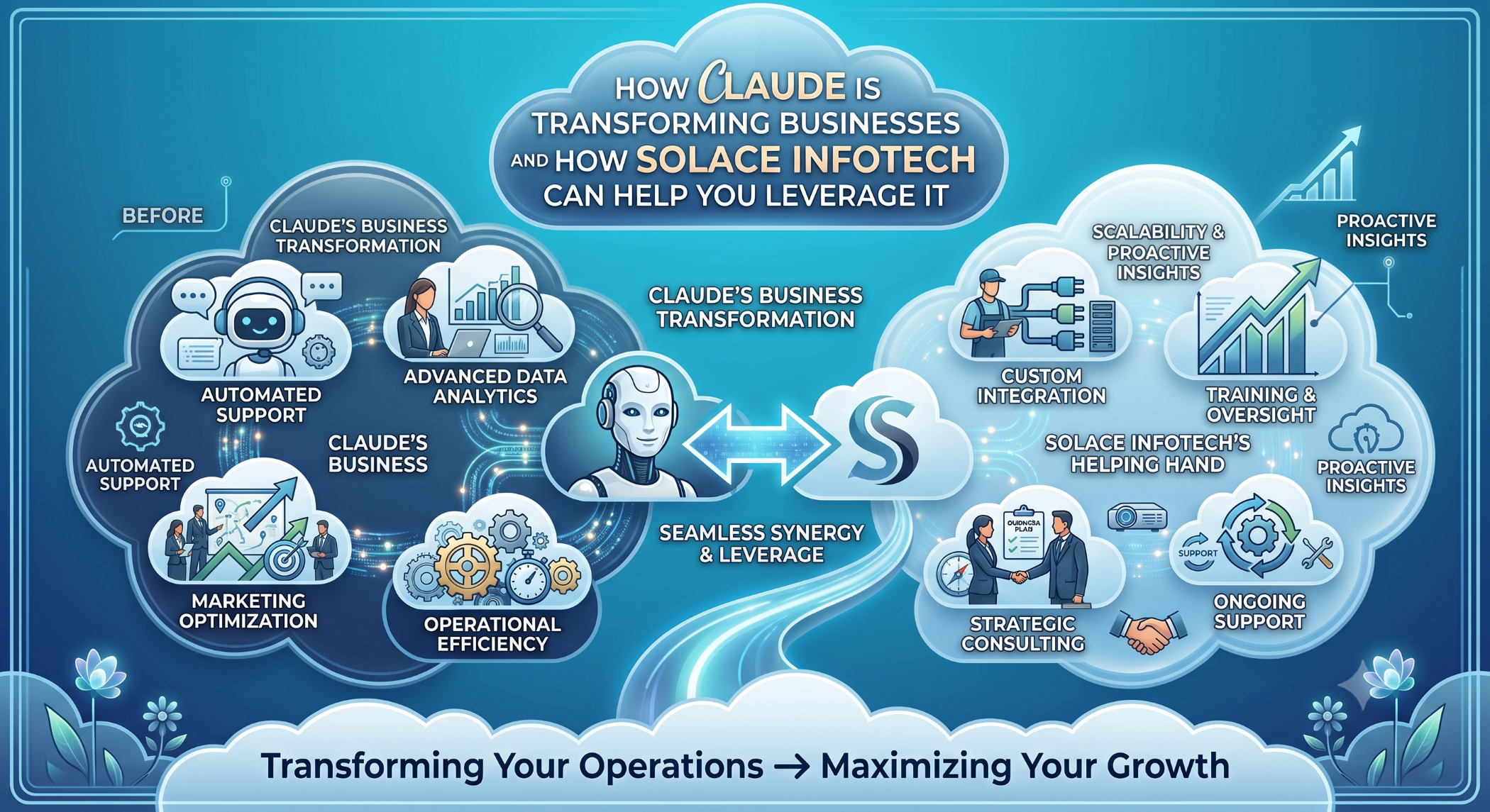
Solace Infotech provides custom web application development services with a focus on performance, scalability, and security. Our development teams can assist with secure application architecture, API security, authentication systems, cloud deployments, security testing, performance optimization, and ongoing maintenance.
Whether you are building a new application or securing an existing platform, implementing web security best practices from the beginning can help reduce risks and support long-term business growth.
Conclusion
Web application security is essential for protecting customer data, business operations, and digital assets. By implementing strong authentication, secure coding practices, input validation, encryption, security testing, monitoring, and access controls, businesses can significantly reduce their exposure to cyber threats.
Security should be viewed as an ongoing investment that evolves alongside the application, technology stack, and threat landscape.