Altcoins: Understanding Alternative Cryptocurrencies and Their Role in Digital Finance
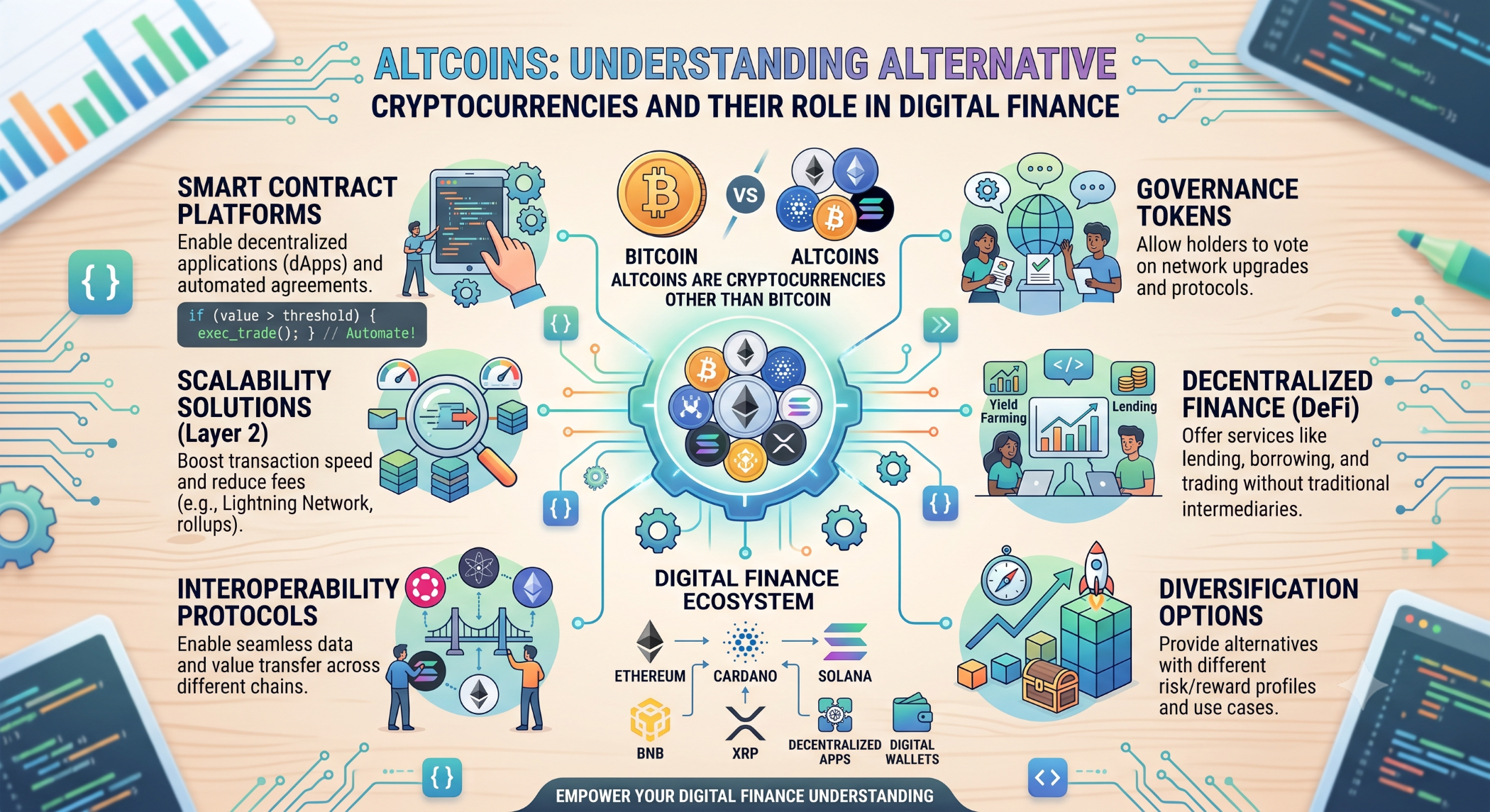
Bitcoin introduced the concept of decentralized digital currency, but the cryptocurrency ecosystem has expanded to include thousands of other blockchain-based assets. These alternatives are commonly referred to as altcoins, a term derived from “alternative coins.”
Altcoins can serve very different purposes. Some are designed for payments, while others support smart contracts, decentralized applications, governance, digital assets, or specialized blockchain networks.
What Is an Altcoin?
An altcoin is generally any cryptocurrency other than Bitcoin.
Altcoins can differ significantly in their:
Blockchain architecture
Consensus mechanisms
Transaction speed
Utility
Governance
Token economics
Some projects operate as independent blockchains, while others use token standards on existing networks.
How Do Altcoins Work?
Different altcoins use different blockchain technologies and consensus mechanisms.
A simplified transaction process is:
User Transaction
↓
Blockchain Network
↓
Transaction Validation
↓
Block / Ledger Update
↓
Confirmed Transaction
The exact process depends on the blockchain supporting the cryptocurrency.
Types of Altcoins
Payment-Focused Cryptocurrencies
Some cryptocurrencies are designed primarily for transferring value between users.
Smart Contract Platforms
Other blockchain networks provide infrastructure for smart contracts and decentralized applications.
Stablecoins
Stablecoins are designed to maintain a relatively stable value against an external reference asset, commonly a fiat currency. Their mechanisms and reserves vary by project.
Governance and Utility Tokens
Some tokens provide access to services, application functionality, or participation in blockchain governance.
Altcoins and Blockchain Technology
Altcoins are closely connected to blockchain technology, but not every project offers the same technical model.
A blockchain may differ in:
Consensus Mechanism
Transaction Model
Smart Contract Support
Scalability
Transaction Costs
Governance
These differences can determine which applications and use cases a particular network is suitable for.
Potential Business Applications
Blockchain-based assets and networks can support a range of business use cases, including:
Digital payments
Tokenized assets
Decentralized applications
Digital ownership
Automated agreements
Blockchain-based marketplaces
Businesses should evaluate the technical and regulatory requirements of a use case before selecting a specific blockchain or token.
Altcoins vs Bitcoin
Bitcoin was designed primarily as a decentralized digital currency and store-of-value-oriented asset.
Altcoins cover a much broader range of purposes. Some focus on smart contracts, application infrastructure, payments, privacy, governance, or other specialized functionality.
Therefore, comparing an altcoin directly with Bitcoin requires understanding the specific purpose and architecture of each project.
Risks Associated With Altcoins
Altcoins can involve significant risks.
These may include:
High price volatility
Project and technology risk
Liquidity risk
Security vulnerabilities
Regulatory uncertainty
Network or governance changes
Fraudulent or poorly designed projects
The existence of a cryptocurrency does not guarantee that it has long-term utility or value.
Security Considerations
Cryptocurrency ownership depends heavily on secure management of wallets, private keys, and account credentials.
Businesses working with digital assets should consider:
Private-key security: Loss or compromise of private keys can result in loss of access to assets.
Wallet security: Use appropriate wallet and custody controls based on the value and risk involved.
Smart-contract risk: Interacting with third-party contracts can introduce technical vulnerabilities.
Operational controls: Organizations should use appropriate authorization and approval procedures for transactions.
Altcoins and Regulations
Cryptocurrency regulations vary significantly across jurisdictions and can change over time.
Businesses should consider applicable requirements related to taxation, licensing, anti-money-laundering obligations, securities rules, consumer protection, and digital-asset custody before launching cryptocurrency-related products.
Altcoins and Technology Development
Businesses interested in blockchain projects may need supporting technology such as:
Blockchain
↓
Smart Contracts
↓
Backend / APIs
↓
Web or Mobile Application
↓
Wallet / Payment Integration
The required architecture depends on the product's functionality and the blockchain being used.
Blockchain Development at Solace Infotech
Solace Infotech's technology capabilities include blockchain, web applications, mobile development, APIs, and product development, which can support businesses exploring blockchain-based applications and digital products.
Technology selection should be based on the specific business use case, technical requirements, security considerations, and applicable regulations.
Best Practices
Businesses should evaluate the underlying blockchain technology rather than focusing only on token price or popularity. Review network architecture, security, development activity, ecosystem maturity, transaction costs, and regulatory considerations.
For production applications, use secure wallet management, audit smart contracts where appropriate, protect private credentials, and monitor blockchain dependencies continuously.
Conclusion
Altcoins represent a broad category of cryptocurrencies beyond Bitcoin, with projects serving different technical and business purposes.
Some focus on payments, while others provide infrastructure for smart contracts, decentralized applications, digital assets, and blockchain-based services.
For businesses considering altcoin or blockchain technology, the most important step is to start with the business problem and evaluate whether blockchain provides a meaningful advantage. A successful implementation requires careful attention to technology, security, economics, and regulatory requirements.