Attitude Is Everything
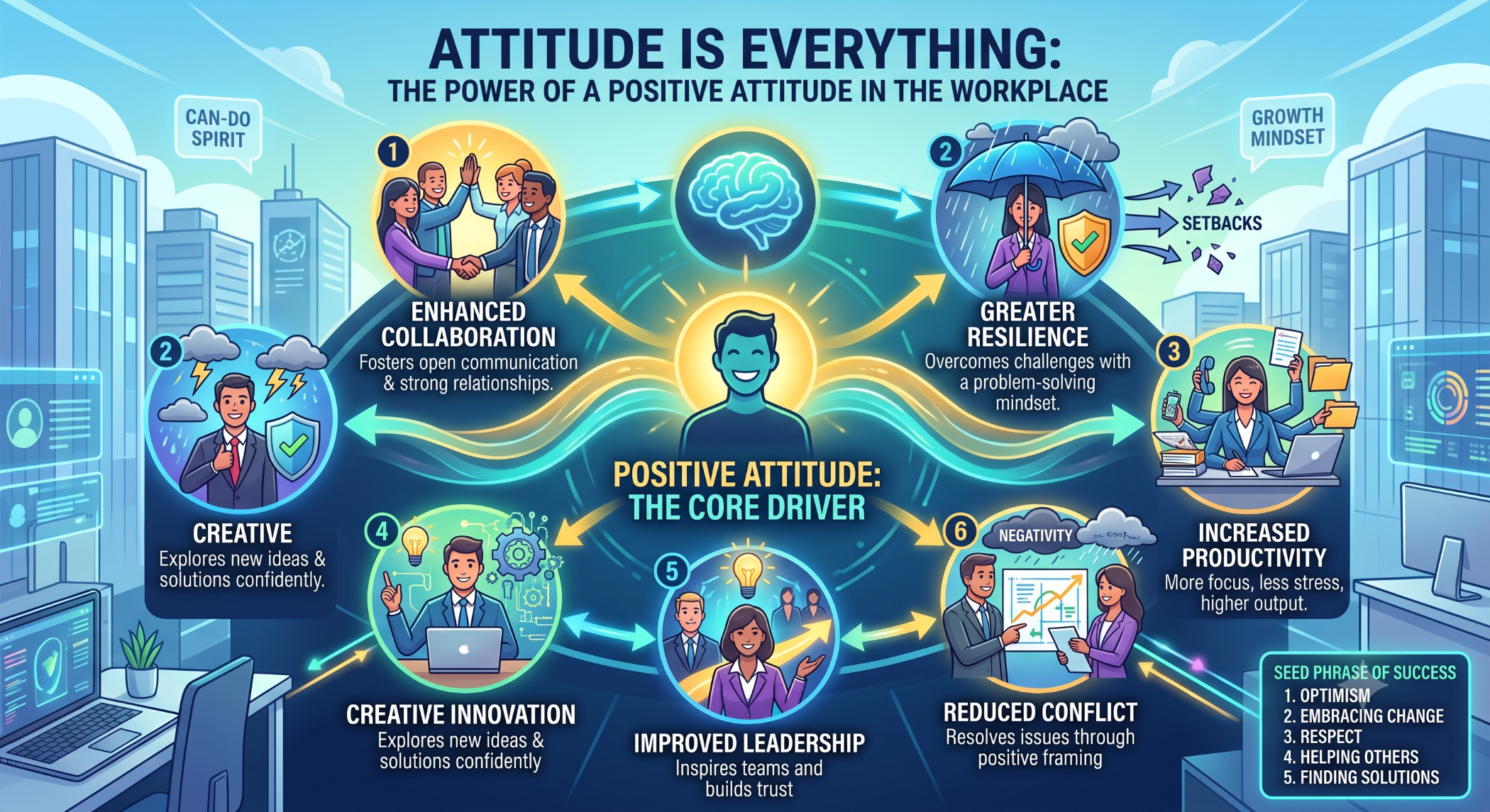
Technical knowledge, experience, and professional skills are important for building a successful career. However, these qualities alone do not always determine how effectively a person performs, works with others, or handles challenging situations.
Attitude plays a major role in professional success.
A person with the right attitude is more likely to approach problems constructively, learn from mistakes, support colleagues, and remain focused on finding solutions. In a technology-driven workplace, where priorities can change quickly and teams regularly face new challenges, having a positive and adaptable attitude can make a significant difference.
Why Attitude Matters at Work
Every workplace includes deadlines, changing requirements, difficult customers, technical problems, and unexpected obstacles. How people respond to these situations often depends on their attitude.
A negative attitude can make even a manageable problem more difficult. It can affect communication, teamwork, productivity, and morale.
A positive attitude does not mean ignoring problems or pretending that everything is perfect. Instead, it means approaching challenges with a solution-oriented mindset.
For example, instead of saying, “This cannot be done,” a constructive approach is to ask, “What is preventing us from completing it, and what can we do about it?”
That small change in perspective can encourage better problem-solving.
Positive Attitude and Productivity
Productivity is not only about working longer hours. It is also about working with focus, responsibility, and purpose.
Employees with a positive attitude generally take greater ownership of their responsibilities. They are more willing to learn new technologies, accept feedback, collaborate with teammates, and adapt when business priorities change.
A positive mindset can also reduce unnecessary negativity within a team. When employees focus on solutions rather than continuously discussing problems, teams can move toward resolution more quickly.
Attitude and Teamwork
Software development and IT projects are rarely completed by one person. Developers, designers, testers, project managers, business analysts, and clients must communicate and collaborate effectively.
A good attitude helps create a healthier team environment.
Team members who respect one another, communicate openly, and help colleagues when necessary can build stronger working relationships. They are also more likely to share knowledge and support the team during demanding project phases.
Even highly skilled professionals can create challenges for a team when their attitude makes collaboration difficult.
Attitude Toward Failure
Failure is an unavoidable part of learning and professional growth.
A project may encounter technical issues. A deployment may fail. A proposal may be rejected. A new strategy may not deliver the expected result.
The important question is not whether a setback occurred. The important question is how you respond to it.
A constructive attitude treats failure as an opportunity to understand what went wrong and improve the next attempt.
Instead of blaming individuals, successful teams analyze the situation, identify the root cause, and establish actions to prevent the same issue from happening again.
Attitude Toward Learning
Technology changes continuously. Programming languages evolve, frameworks receive new releases, cloud platforms introduce new services, and businesses adopt new digital strategies.
No developer or technology professional can know everything.
A strong learning attitude is therefore essential.
Professionals who remain curious and open to learning are better positioned to adapt to change. They actively explore new tools, understand emerging technologies, improve their existing skills, and learn from experienced colleagues.
A willingness to learn can sometimes be more valuable than having knowledge of one specific technology.
Attitude and Leadership
Leadership is not limited to people who have a manager or director title.
Anyone who takes ownership, supports colleagues, communicates responsibly, and helps move a project forward can demonstrate leadership.
A good leader maintains a constructive attitude even under pressure. Rather than spreading panic when a problem occurs, the leader focuses on understanding the situation and guiding the team toward a solution.
Leaders also influence the attitude of the people around them. Their behavior can encourage accountability, collaboration, confidence, and professionalism.
Attitude Toward Customers
Client relationships are especially important in technology services.
Clients may change requirements, raise concerns, request urgent fixes, or question project decisions. These situations require professional communication and patience.
A positive attitude helps teams listen carefully, understand the client's actual concern, and respond with practical solutions.
This does not mean agreeing with every request. Professionalism also means communicating limitations clearly, setting realistic expectations, and finding the best possible solution for both sides.
Attitude Can Be Developed
A positive attitude is not necessarily something people are simply born with. It can be developed through conscious habits.
Start by focusing on what can be controlled rather than spending excessive energy on things that cannot be changed.
Learn to accept constructive feedback without treating it as a personal attack.
Take responsibility for mistakes instead of immediately looking for someone to blame.
Stay open to different perspectives and recognize that colleagues may approach the same problem differently.
Most importantly, develop the habit of asking “What can I do to improve this situation?”
Creating a Positive Workplace Culture
Organizations also have an important role to play in encouraging healthy attitudes.
A positive workplace culture can be supported through open communication, recognition of good work, learning opportunities, collaboration, clear expectations, and respectful leadership.
Employees should feel comfortable sharing ideas and discussing challenges. At the same time, accountability should remain an important part of the culture.
A positive workplace is not one where there are no problems. It is one where people work together to solve problems constructively.
Attitude Is Especially Important in the IT Industry
The IT industry is highly dynamic. Teams often work across technologies, time zones, projects, and business domains.
Technical skills may help a professional get started, but attitude can strongly influence long-term growth.
A developer who is willing to learn can adapt to a new framework. A project manager who communicates calmly can help a team navigate difficult deadlines. A salesperson who remains persistent after rejection can continue building opportunities. A team member who supports others can contribute beyond their individual responsibilities.
These behaviors create value that cannot be measured only by technical expertise.
Conclusion
Attitude is everything when it comes to turning skills and opportunities into meaningful results.
Knowledge gives professionals the ability to perform a task, while the right attitude can influence how they respond to challenges, collaborate with others, learn from experience, and grow over time.
In both individual careers and organizational success, a positive and responsible attitude can create a strong foundation for productivity, teamwork, leadership, and continuous improvement.
At the end of the day, we cannot always control what happens around us, but we can control how we respond. That response can make all the difference.