What Is a Business Perspective?
A business perspective means looking at decisions, processes, and investments from the point of view of overall business objectives.
In the technology industry, it is easy to focus only on development tasks, technical specifications, or individual features. However, technology should ultimately solve a business problem, improve an existing process, reduce costs, increase revenue, or create a better customer experience.
A business perspective connects technology decisions with measurable business outcomes.
For example, developing a new mobile application is not valuable simply because the application uses modern technology. Its real value comes from how effectively it helps the business attract customers, improve engagement, automate processes, or generate revenue.
Why a Business Perspective Matters
Businesses make decisions every day about technology, employees, budgets, customers, marketing, operations, and future investments.
Without a clear business perspective, organizations may invest heavily in solutions that do not address their most important problems.
A business-focused approach helps decision-makers ask the right questions:
What problem are we solving?
Who benefits from the solution?
What business result should we achieve?
What will the investment cost?
How will success be measured?
These questions help ensure that resources are directed toward initiatives that create meaningful value.
Technology Should Support Business Goals
Technology is a business enabler rather than an objective by itself.
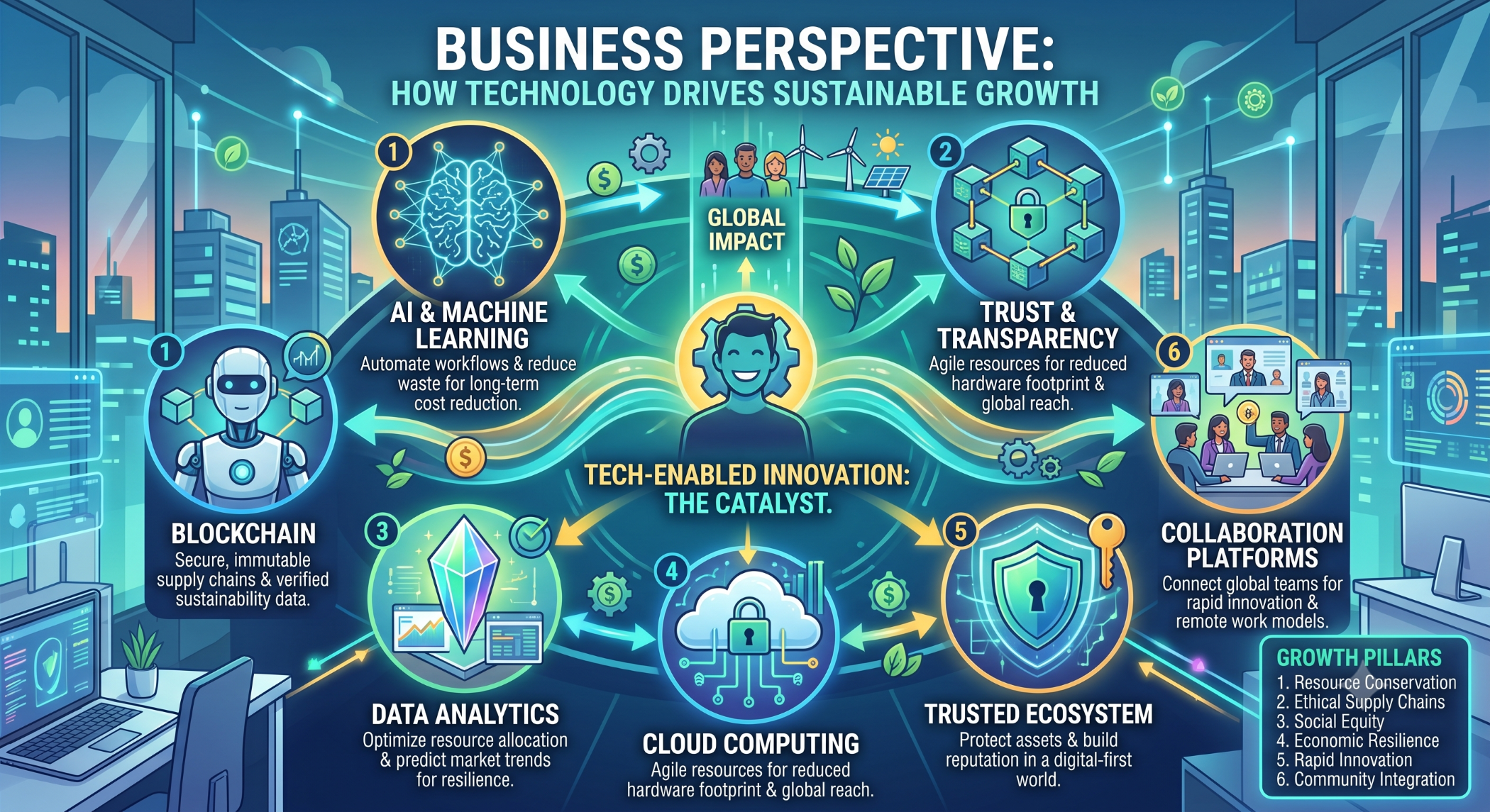
Organizations may adopt cloud computing, artificial intelligence, mobile applications, automation, analytics, or modern software architectures. But every technology decision should have a clear connection to business needs.
For example, an organization may introduce automation to reduce repetitive manual work. A retailer may use analytics to understand customer behavior. A logistics company may use real-time tracking to improve delivery visibility. A financial organization may modernize its software infrastructure to improve scalability and reliability.
The technology is different, but the principle remains the same: business requirements should drive technology decisions.
Understanding the Customer
A strong business perspective begins with understanding customers.
Businesses need to know what their customers expect, what problems they experience, and why they choose one product or service over another.
Technology can help organizations collect and analyze customer information, personalize digital experiences, improve communication, and simplify interactions.
However, collecting data is not enough. Businesses must convert customer insights into practical improvements.
A customer-facing application with many features may still fail if users find it confusing. In contrast, a simple application that solves a specific customer problem effectively can deliver significant value.
Business Perspective in Software Development
Software development should not be treated as an isolated technical activity.
Before development starts, teams should understand the business process behind the application. Developers, business analysts, project managers, and stakeholders should have a common understanding of the expected outcomes.
A business-focused development process considers:
Business objectives
Target users
Functional requirements
Operational workflows
Budget and timeline
Scalability requirements
Security and compliance
Expected return on investment
This approach helps prevent unnecessary features and reduces the risk of building software that does not meet real business needs.
Balancing Cost and Value
Every technology investment involves cost.
Organizations must consider development expenses, infrastructure costs, licensing, maintenance, support, security, and future enhancements.
The cheapest solution is not always the best solution, and the most expensive technology is not automatically the most valuable.
A business perspective focuses on cost versus expected value.
For example, investing in a scalable cloud architecture may require more initial planning, but it can reduce infrastructure management effort and support future growth. Similarly, investing in automated testing may require additional development time initially but can reduce recurring quality issues later.
The objective is to make decisions that provide sustainable business value rather than simply minimizing short-term costs.
Business Perspective and Innovation
Innovation is important for organizations that want to remain competitive.
However, innovation should not mean adopting every new technology as soon as it becomes available.
Artificial intelligence, blockchain, IoT, augmented reality, automation, and other technologies may create valuable opportunities, but businesses should evaluate where they can provide genuine advantages.
A practical innovation strategy identifies a business problem first and then evaluates whether technology can provide a better solution.
This reduces the risk of investing in technology simply because it is popular.
Data-Driven Business Decisions
Modern businesses generate large volumes of data through websites, mobile applications, customer interactions, financial systems, marketing platforms, and operational processes.
A strong business perspective treats this data as an important decision-making resource.
Analytics can help organizations understand sales performance, customer behavior, marketing effectiveness, operational efficiency, and product usage.
Instead of relying entirely on assumptions, businesses can use data to identify trends, measure performance, and determine where improvements are required.
Importance of Scalability
Business growth can create new technology challenges.
An application that works well for a few hundred users may require significant architectural changes when the number of users grows into the thousands or millions.
A business perspective therefore considers future requirements, not just current needs.
Scalable architecture, modular software design, cloud infrastructure, efficient databases, caching, monitoring, and automation can help businesses prepare for growth.
Technology planning should support the organization's business roadmap rather than forcing the business to work around technical limitations.
Security From a Business Perspective
Security is often viewed as a technical responsibility, but its impact is fundamentally business-related.
A security incident can result in financial losses, operational disruption, reputational damage, customer dissatisfaction, and regulatory consequences.
Organizations should therefore treat application security, infrastructure security, data protection, identity management, access control, monitoring, and backup strategies as part of overall business risk management.
Security decisions should be considered during planning and development rather than added only after a system is completed.
Business Perspective in Digital Transformation
Digital transformation is not simply about replacing old software with new software.
It involves improving how an organization operates through technology, data, automation, and better digital experiences.
A successful transformation evaluates the complete business process.
For example, moving a paper-based process to an online form may improve accessibility, but further automation could eliminate repetitive approvals, integrate data with other systems, and provide real-time reporting.
The greatest benefits often come from rethinking the process itself rather than simply digitizing existing steps.
The Role of Leadership
Business perspective also requires effective leadership.
Leaders must understand both the organization's strategic objectives and the capabilities and limitations of technology.
They need to prioritize initiatives, allocate resources, manage risks, and ensure that technology teams understand why a project matters to the business.
Good leadership creates alignment between business stakeholders and technical teams.
When everyone understands the desired outcome, teams can make better decisions throughout the project lifecycle.
Measuring Business Success
Technology projects should be evaluated using measurable outcomes.
Depending on the project, organizations may track:
Revenue growth
Customer acquisition
Conversion rates
Operational efficiency
Cost reduction
Application adoption
Customer satisfaction
Processing time
Employee productivity
System availability
These measurements help determine whether the technology investment is actually delivering the expected business benefits.
Conclusion
A strong business perspective helps organizations move beyond technology for technology's sake.
Businesses should evaluate every major technology decision based on the problem being solved, the users being served, the resources being invested, and the outcomes expected.
When business strategy and technology strategy work together, organizations can make better investments, improve operational efficiency, deliver stronger customer experiences, and prepare for sustainable growth.
Technology provides the tools, but a clear business perspective determines how those tools create value.