Introduction
A company is more than a legal or organizational structure. It is a group of people working together toward shared objectives, serving customers, solving problems, and creating value.
In the technology industry, companies must continuously adapt to changing technologies, customer expectations, market conditions, and business requirements. Technical expertise is important, but sustainable success also depends on people, processes, leadership, communication, and innovation.
A successful technology company brings these elements together to create reliable solutions and meaningful customer outcomes.
What Is a Company?
A company is an organization created to provide products or services and generate value for its customers and stakeholders.
Every company has its own vision, mission, culture, operating model, and goals.
A technology company typically focuses on areas such as software development, web applications, mobile applications, cloud computing, artificial intelligence, data, cybersecurity, IT consulting, or digital transformation.
Regardless of its specialization, the company's long-term success depends on its ability to understand customer needs and consistently deliver value.
The Importance of a Clear Vision
A clear vision provides direction.
Employees should understand what the company is trying to achieve and why their work matters. Without a common direction, teams may focus on individual activities without understanding the larger objective.
A strong vision helps align technology, sales, marketing, operations, delivery, and leadership.
It also provides a foundation for making difficult decisions about priorities and investments.
People Are the Foundation
Technology companies depend heavily on people.
Developers, designers, testers, project managers, business analysts, sales professionals, marketers, and support teams all contribute different skills.
A company becomes stronger when it invests in its people.
This includes providing opportunities for learning, encouraging collaboration, recognizing contributions, supporting professional growth, and creating an environment where employees can take responsibility for their work.
A strong team can become one of the company's most important competitive advantages.
Building the Right Company Culture
Company culture influences how people work and interact.
A healthy culture encourages professionalism, respect, communication, accountability, and continuous improvement.
Culture is not created only through written policies. It is reflected in everyday behavior.
How leaders respond to mistakes, how employees communicate problems, how teams treat customers, and how contributions are recognized all shape the culture.
A positive culture can improve collaboration and employee engagement while creating a more consistent customer experience.
Customer Focus
Customers are at the center of any successful business.
A technology company should understand not only what a customer asks for, but also why the customer needs it.
For example, a business may ask for a mobile application, but the real objective may be to improve customer engagement, automate a process, increase sales, or reduce operational effort.
Understanding the underlying business goal allows technology teams to recommend better solutions.
Technology as a Business Enabler
Technology should support business objectives.
A company may adopt artificial intelligence, cloud infrastructure, automation, analytics, or modern software architecture, but technology alone does not guarantee success.
The important question is whether the technology solves a real problem and creates measurable value.
A strong technology company therefore combines technical expertise with business understanding.
Innovation and Adaptability
The technology industry changes rapidly.
New frameworks, platforms, development approaches, and AI capabilities continue to emerge. Companies that refuse to adapt can quickly fall behind.
Innovation does not necessarily mean adopting every new technology. It means identifying opportunities to improve products, services, processes, or customer experiences.
An adaptable company evaluates new ideas carefully and adopts them where they provide genuine business value.
Quality Matters
Quality is critical for technology companies.
Poor-quality software can create customer frustration, operational problems, security risks, maintenance costs, and reputational damage.
Quality should therefore be considered throughout the development lifecycle.
It includes:
Functionality: The product should perform according to requirements.
Performance: The application should respond efficiently under expected usage.
Security: Sensitive data and systems should be protected appropriately.
Usability: Customers should be able to use the product effectively.
Maintainability: Future teams should be able to understand, test, and improve the system.
Importance of Accountability
A strong company requires accountability at every level.
Employees should take ownership of their responsibilities and communicate problems early.
Managers should take responsibility for decisions and team outcomes.
Leadership should remain accountable for organizational direction and customer commitments.
Accountability creates trust because people know that responsibilities are taken seriously.
Collaboration Across Teams
Technology projects are rarely completed by one department.
Sales teams understand prospects and market opportunities. Business analysts understand requirements. Designers focus on user experience. Developers build the solution. QA validates functionality. DevOps manages infrastructure and deployment. Project managers coordinate the overall delivery.
Collaboration connects these different capabilities.
When departments work in isolation, important information can be lost. Effective cross-functional collaboration creates better alignment and smoother execution.
Communication Is Essential
Communication is one of the most important capabilities within a company.
Employees need to communicate clearly with colleagues, managers, customers, and partners.
Strong communication includes transparent status reporting, clear requirements, early escalation of risks, active listening, and professional handling of disagreements.
Good communication reduces misunderstandings and helps teams make decisions faster.
Company and Continuous Learning
Learning should be part of a modern technology company's culture.
Employees need opportunities to develop both technical and professional skills.
Developers may learn new frameworks or cloud platforms. Project managers may improve planning and leadership skills. Sales teams may learn new approaches to customer engagement. Leadership may develop stronger business and strategic capabilities.
Continuous learning keeps the organization adaptable and prepares it for future opportunities.
The Role of Leadership
Leadership provides direction and establishes standards.
Good leaders communicate expectations clearly, make informed decisions, support their teams, and remain accountable for outcomes.
They also create an environment where employees can contribute ideas and take ownership.
Leadership is not simply about giving instructions. It is about enabling people to perform effectively and helping the organization move toward its goals.
Company Processes and Efficiency
Strong companies need effective processes.
Processes help organizations manage requirements, development, quality assurance, communication, project delivery, customer support, and internal operations consistently.
However, processes should not become unnecessary bureaucracy.
Good processes make work easier, clarify responsibility, improve visibility, and reduce avoidable errors.
Companies should regularly review their processes and improve them as the organization grows.
Security and Reliability
Technology companies have a responsibility to build secure and reliable systems.
Security should be considered during architecture, development, testing, and deployment rather than added only after a problem occurs.
Organizations should also consider backups, monitoring, disaster recovery, access control, infrastructure security, and incident response.
Reliable technology protects both customer trust and business continuity.
Company Growth
Growth is an important objective for many organizations, but rapid growth can also introduce challenges.
As a company expands, it may need stronger processes, improved communication, better management systems, additional leadership, and more structured delivery practices.
Growth should therefore be supported by scalable operations.
The objective should be to increase business capacity without allowing quality, employee experience, or customer satisfaction to decline.
Company Reputation
Reputation is built over time through consistent actions.
Customers evaluate companies based on product quality, communication, reliability, responsiveness, transparency, and support.
A single successful project may create an opportunity, but consistently delivering on commitments builds long-term relationships.
Employees also influence reputation because every interaction with a customer can shape the perception of the company.
Technology Partnerships
Many businesses work with external technology partners when they need specialized expertise or additional development capacity.
A strong technology partner should understand the customer's business, communicate clearly, provide relevant technical expertise, and remain accountable for agreed responsibilities.
The relationship should be built on transparency and shared objectives rather than simply exchanging tasks for payment.
Building a Successful Technology Company
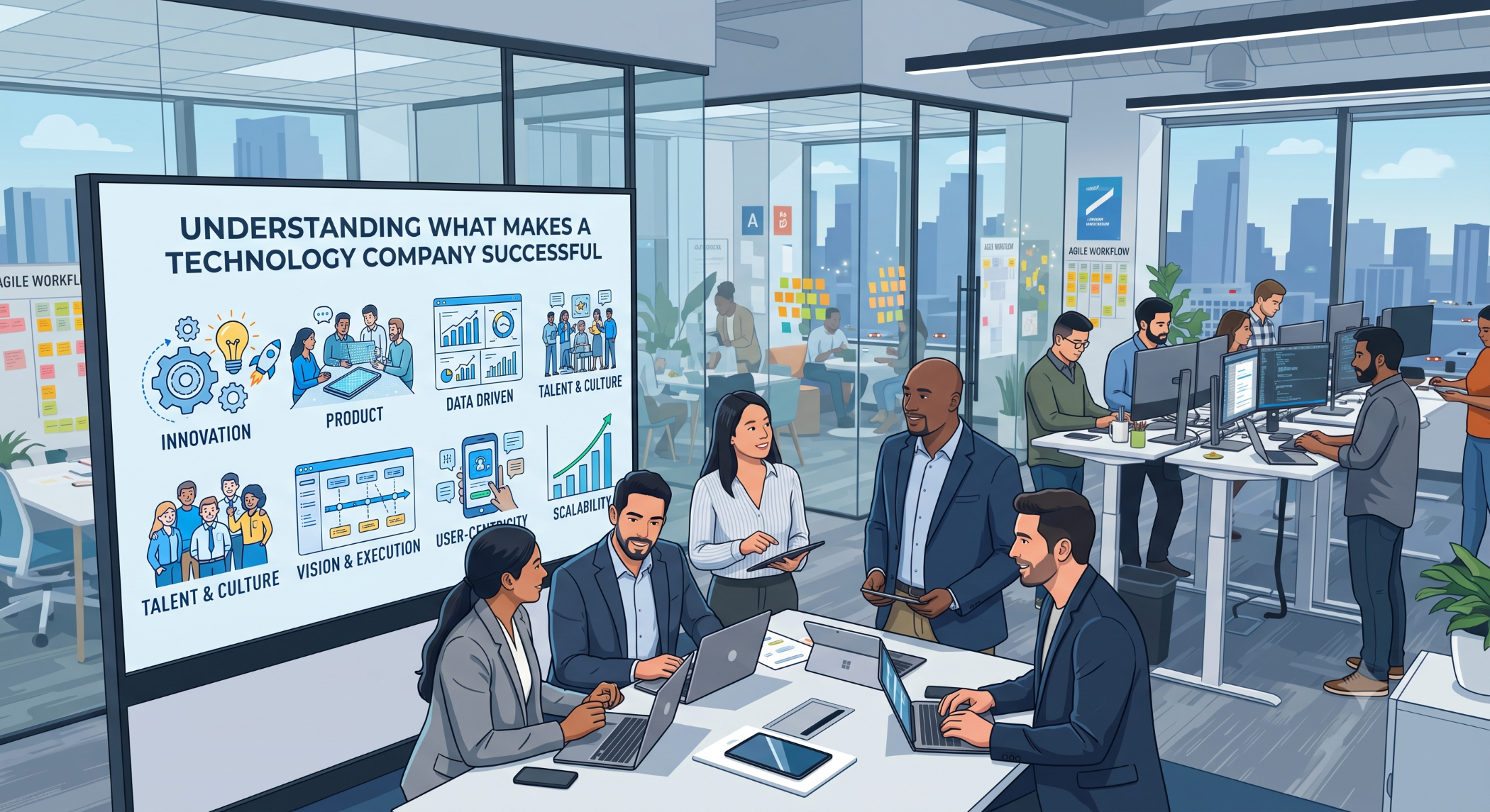
There is no single formula for building a successful technology company.
However, several principles consistently matter:
Clear vision provides direction.
Strong people provide capability.
Customer focus provides purpose.
Innovation provides adaptability.
Quality provides reliability.
Accountability provides trust.
Collaboration provides collective strength.
Continuous learning provides long-term growth.
When these principles work together, a company can build a stronger foundation for sustainable success.
Conclusion
A successful company is built through people, purpose, technology, and consistent execution.
For technology organizations in particular, success requires more than knowing how to develop software. It requires understanding customers, building capable teams, encouraging learning, maintaining quality, communicating effectively, and adapting to change.
The strongest companies create an environment where employees can grow, customers can trust the organization, and technology can be used to solve meaningful business problems.
A company may begin with an idea, but its long-term success is determined by how effectively it turns that idea into value for its customers and its people.