What Is Custom Development?
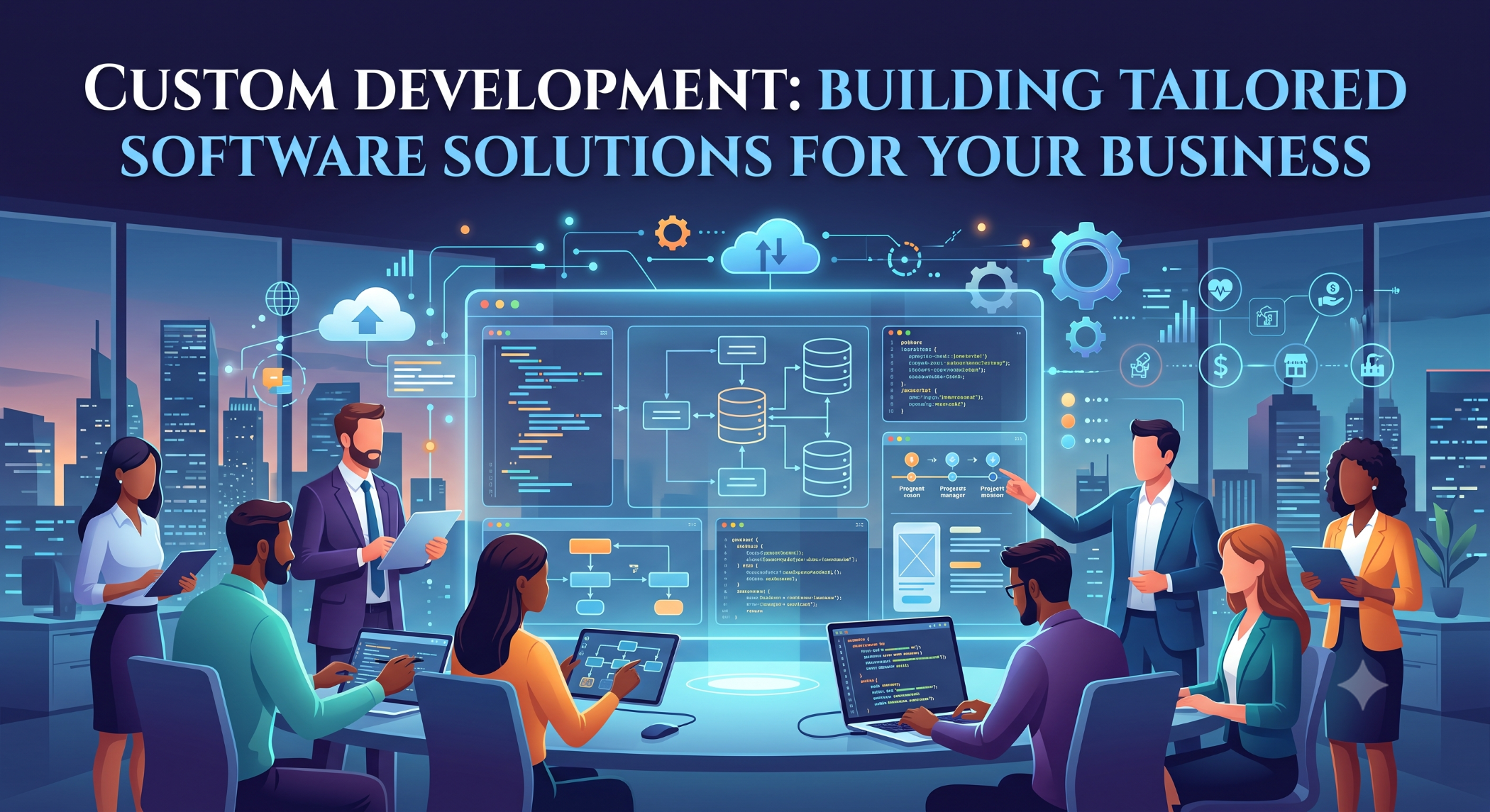
Custom development is the process of designing and building software specifically around the requirements of a business, product, or organization.
Unlike off-the-shelf software, which provides a predefined set of features for a broad market, custom software can be designed around specific workflows, user roles, integrations, and business objectives. Microsoft notes that custom application development provides greater flexibility for meeting specific and complex business requirements and can be adapted as those requirements change.
Custom development can be used for web applications, mobile applications, enterprise platforms, customer portals, e-commerce systems, internal business tools, APIs, and industry-specific software.
Why Businesses Choose Custom Development
Generic software can be an effective choice when its functionality closely matches the business requirement. However, problems can arise when organizations need workflows or capabilities that the product does not support.
Custom development provides the flexibility to design the solution around the business.
For example, a logistics company may need a platform that combines customer bookings, dispatch management, driver applications, document processing, tracking, notifications, and reporting. Instead of forcing these workflows into an unrelated product, a custom application can be designed specifically around them.
Benefits of Custom Software Development
Complete Customization
One of the biggest advantages of custom development is flexibility.
Every feature can be designed according to the organization's requirements. User roles, workflows, dashboards, integrations, notifications, business rules, and reporting can all be tailored to the intended use case.
This is particularly useful when the business has processes that are unique or difficult to support with standard software.
Better Scalability
A custom application can be designed with future growth in mind.
Architecture, databases, APIs, infrastructure, and application components can be selected according to expected usage and business requirements. AWS recommends designing solutions with anticipated growth in mind and emphasizes modularity, security, and scalability as important architectural considerations.
This does not mean every application needs a complex architecture from the beginning. Instead, the architecture should be appropriate for current needs while leaving room for sensible growth.
Improved Integration
Businesses commonly rely on multiple systems, including CRM platforms, payment gateways, accounting applications, ERP systems, communication services, analytics platforms, and third-party APIs.
Custom development makes it possible to design integrations around the organization's actual workflow.
A well-designed integration layer can reduce manual data entry and connect systems more efficiently.
Greater Control
With custom software, businesses can have greater control over functionality, architecture, development priorities, integrations, and future improvements.
The organization is not necessarily dependent on a software vendor's product roadmap for every change.
This can be particularly valuable when the application represents an important part of the company's operations.
Better User Experience
Custom development allows the application experience to be designed around the actual users.
Instead of presenting users with features they do not need, the application can prioritize the workflows they perform most frequently.
Clear navigation, role-based dashboards, simplified forms, automation, and contextual information can make the application easier to use.
Custom Development vs Off-the-Shelf Software
The right choice depends on the business requirement.
Off-the-shelf software can make sense when requirements are common, implementation needs to be fast, and the available functionality is already a strong fit.
Custom development becomes more attractive when the business requires specialized workflows, extensive integrations, unique functionality, greater control, or significant future flexibility.
The decision should therefore be based on business value rather than simply comparing development cost with software license cost.
Start With Business Requirements
A successful custom-development project starts with understanding the problem.
Before selecting a technology stack or writing code, the team should understand:
Who will use the system?
What problem does it solve?
What workflows must it support?
What systems need to integrate with it?
What security requirements exist?
What scale is expected?
What does success look like?
Clear requirements reduce ambiguity and help the development team make better architectural and product decisions.
Choosing the Right Technology Stack
There is no universal technology stack for custom development.
Depending on the requirements, a project may use technologies such as Laravel, PHP, Node.js, React, Angular, Python, .NET, MySQL, PostgreSQL, cloud infrastructure, or other modern platforms.
The technology should be selected based on factors such as performance, scalability, security, team expertise, maintainability, integration requirements, and long-term business needs.
Choosing a technology simply because it is popular can create unnecessary complexity.
Designing Scalable Architecture
Architecture determines how the application behaves as complexity and usage increase.
A modular architecture can make components easier to maintain and scale. AWS recommends modular and loosely coupled approaches for applications that need to evolve and scale, while also emphasizing that architecture should be aligned with workload requirements.
A custom application should therefore be designed with both current requirements and realistic future needs in mind.
Security in Custom Development
Security should be incorporated into the development lifecycle from the beginning.
AWS recommends integrating application security into design, development, testing, deployment, and operations rather than waiting until the final security review. Early threat modeling and security practices can identify problems before they become more expensive to address.
A secure custom application may require appropriate authentication, authorization, encryption, input validation, secure API design, dependency management, logging, monitoring, and regular security testing.
Security should be treated as part of application quality, not as an optional feature.
API-First Custom Development
APIs are important when applications need to communicate with mobile apps, third-party systems, or other internal services.
An API-first approach can provide a structured way for different parts of the technology ecosystem to communicate.
For example, a business may have a web application, mobile application, customer portal, and internal administrative system. A well-designed API layer can allow these applications to access common business functionality without duplicating the underlying logic.
Custom Mobile App Development
Custom development is also widely used for mobile applications.
Businesses may need applications for customers, employees, field workers, drivers, sales teams, or partners.
A custom mobile application can be designed around the specific workflow of its users.
For example, a field-service application might include job assignments, GPS-based information, image uploads, digital signatures, status updates, offline functionality, and notifications.
Custom E-Commerce Development
E-commerce businesses often begin with established platforms, but complex requirements may eventually justify custom development.
Custom e-commerce solutions can support specialized pricing, product configurations, order workflows, marketplace functionality, inventory integrations, customer portals, or industry-specific business rules.
The objective is to create an experience that supports the organization's commercial model rather than forcing that model into the limitations of a standard platform.
Custom Development and Artificial Intelligence
AI can also be integrated into custom applications.
Businesses may use AI for document processing, customer support, search, recommendations, classification, automation, data analysis, or intelligent workflows.
Custom development is particularly useful when AI needs to be connected to proprietary business data and existing workflows.
For example, an enterprise application could use AI to extract information from documents and then pass the structured data into existing business processes.
The AI capability becomes part of the larger software solution rather than operating as an isolated feature.
Agile Custom Development
Custom software requirements can evolve as stakeholders see the product and provide feedback.
An iterative development approach can help teams build functionality in stages, validate assumptions, and prioritize the most valuable features.
Modern development practices commonly combine Agile, DevOps, CI/CD, automation, and security to improve iteration speed and software reliability.
This approach can be particularly useful for startups and businesses developing new products where requirements may not be fully known at the beginning.
Minimum Viable Product
Custom development does not always require building the complete product in the first release.
An MVP, or minimum viable product, focuses on the smallest set of functionality necessary to validate the business idea or core workflow.
Once the initial product is tested with real users, the business can prioritize further features based on actual feedback.
This can reduce unnecessary development and help businesses learn before making larger investments.
Testing and Quality Assurance
Custom applications should be tested systematically before production deployment.
Testing can cover functionality, APIs, databases, security, usability, performance, browser compatibility, mobile devices, and critical business workflows.
Automated testing can also help reduce regression risk as the application evolves.
Security testing should be integrated into the lifecycle rather than postponed until after development. AWS specifically recommends regular security testing and code reviews as part of application security practices.
Deployment and DevOps
Custom development does not end when coding is complete.
The application also needs reliable build, deployment, monitoring, backup, and operational processes.
CI/CD pipelines can automate portions of testing and deployment and make releases more repeatable. Modern development practices increasingly combine development, operations, automation, and security to improve delivery reliability.
Infrastructure-as-code can also help organizations manage environments consistently and make deployments easier to reproduce.
Maintenance and Continuous Improvement
Business requirements change after software goes live.
New features may be required. Existing functionality may need improvement. Security vulnerabilities may need to be addressed. Third-party APIs may change. Application performance may need optimization.
Custom software should therefore be treated as an evolving product rather than a one-time development project.
Regular maintenance and improvement help ensure that the application continues to provide value.
How Much Does Custom Development Cost?
There is no fixed price for custom development.
The cost depends on factors such as application complexity, number of platforms, required integrations, UI/UX requirements, security, infrastructure, development team size, and expected timeline.
A small internal business application may require a relatively limited investment, while a large enterprise platform can involve significant architecture, development, testing, infrastructure, and long-term maintenance.
The best way to estimate a project is to first define the scope and technical requirements and then prepare an effort-based estimate.
Common Mistakes in Custom Development
One common mistake is starting development without adequately understanding the business problem.
Another is adding too many features before validating the core product.
Choosing technology before understanding requirements can also create unnecessary complexity.
Ignoring security until the end can result in expensive redesign and remediation. AWS specifically recommends addressing security earlier in the development lifecycle to reduce rework and improve software quality.
Organizations should also avoid creating overly complex architectures simply because they appear modern. Architecture should match actual requirements.
How Solace Infotech Can Help
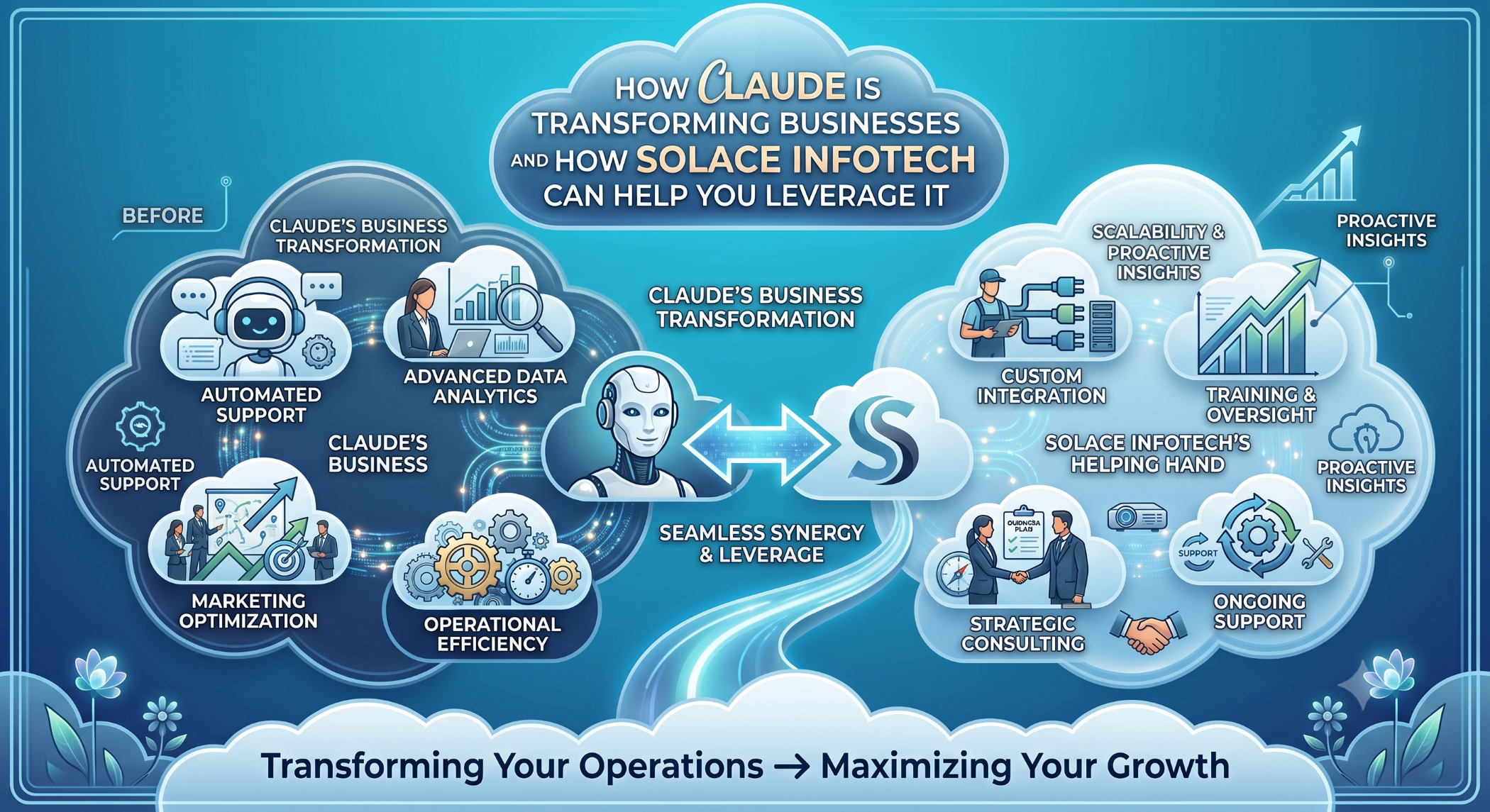
Solace Infotech provides custom software development services for businesses that need solutions tailored to their workflows and objectives.
Custom development can combine web, mobile, backend, API, database, cloud, AI, and integration capabilities into a unified solution.
The right approach begins with understanding the business problem, defining requirements, selecting appropriate technologies, designing a maintainable architecture, developing incrementally, testing thoroughly, and supporting the product after launch.
Conclusion
Custom development gives businesses the flexibility to build software around their actual needs rather than adapting their operations to a predefined product.
It can provide greater customization, integration flexibility, scalability, user-experience control, and long-term adaptability.
However, successful custom development is not simply about writing more code. It requires a clear understanding of the business problem, thoughtful architecture, appropriate technology selection, strong security practices, effective testing, and continuous improvement.
When technology and business requirements are aligned from the beginning, custom software can become a strategic asset that improves operations, supports customers, and creates a foundation for long-term growth.