Custom Development PHP
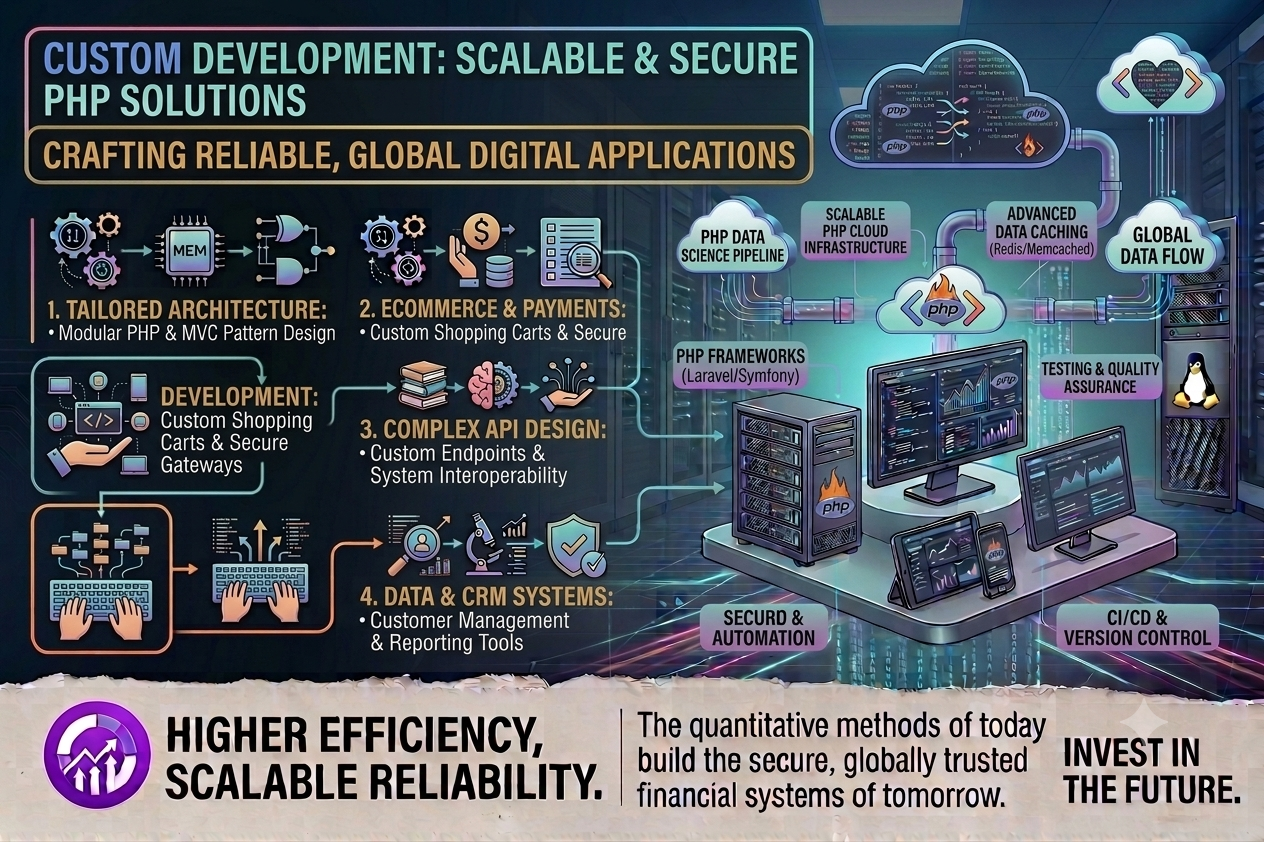
PHP remains one of the most widely used server-side programming languages for web application development. From startups to enterprises, businesses continue to rely on PHP for building dynamic websites, customer portals, SaaS platforms, eCommerce solutions, APIs, and enterprise applications. Modern PHP development focuses on creating customized solutions that align with business workflows, scalability requirements, and long-term growth objectives.
What Is Custom PHP Development?
Custom PHP development involves building web applications, websites, APIs, and business solutions specifically designed around an organization's unique requirements rather than relying entirely on pre-built software.
Unlike generic applications, custom PHP solutions can be tailored to support:
Business-specific workflows
Custom user roles and permissions
Third-party integrations
Industry-specific requirements
Specialized reporting
Customer portals
SaaS platforms
Marketplace applications
Internal business systems
The goal is to create software that fits the business rather than forcing the business to adapt to software limitations.
Why Businesses Choose PHP
PHP continues to be a popular choice because of its mature ecosystem, extensive community support, flexibility, and compatibility with modern web technologies.
Some key advantages include:
Open-source technology
Large developer ecosystem
Extensive framework support
Strong database integration
API development capabilities
Cloud deployment support
Cost-effective hosting
Cross-platform compatibility
Modern PHP versions also include performance improvements, stronger typing capabilities, improved security features, and better development tooling.
Benefits of Custom PHP Development
Flexibility
Custom PHP applications can be designed around specific business processes, allowing organizations to implement functionality that may not be available in off-the-shelf solutions.
Scalability
As businesses grow, custom PHP applications can be expanded with additional features, integrations, and infrastructure improvements without requiring a complete platform replacement.
Cost Effectiveness
Since PHP is open-source, organizations avoid licensing costs associated with many proprietary platforms. Development investments can be focused on creating business value rather than software licensing.
Security
Custom PHP applications can implement security controls tailored to specific business requirements, including authentication, authorization, encryption, API security, and data protection mechanisms.
Seamless Integrations
PHP applications can integrate with:
CRM systems
ERP platforms
Payment gateways
Marketing automation tools
Inventory systems
Third-party APIs
Cloud services
These integrations help create connected digital ecosystems and reduce manual processes.
Popular Use Cases for Custom PHP Development
Business Management Systems
Organizations often use PHP to build internal systems that manage operations, reporting, workflows, and employee activities.
Customer Portals
Custom portals can provide customers with secure access to services, documents, subscriptions, support requests, and account information.
SaaS Platforms
Many software-as-a-service products use PHP frameworks to manage subscriptions, users, permissions, billing, and application logic.
eCommerce Solutions
PHP is frequently used for eCommerce platforms, product management systems, order processing, payment integration, and inventory management.
API Development
Businesses can use PHP to create RESTful APIs and backend services that power websites, mobile applications, and third-party integrations.
Modern PHP Frameworks
Modern PHP development often utilizes frameworks that accelerate development and improve maintainability.
Laravel
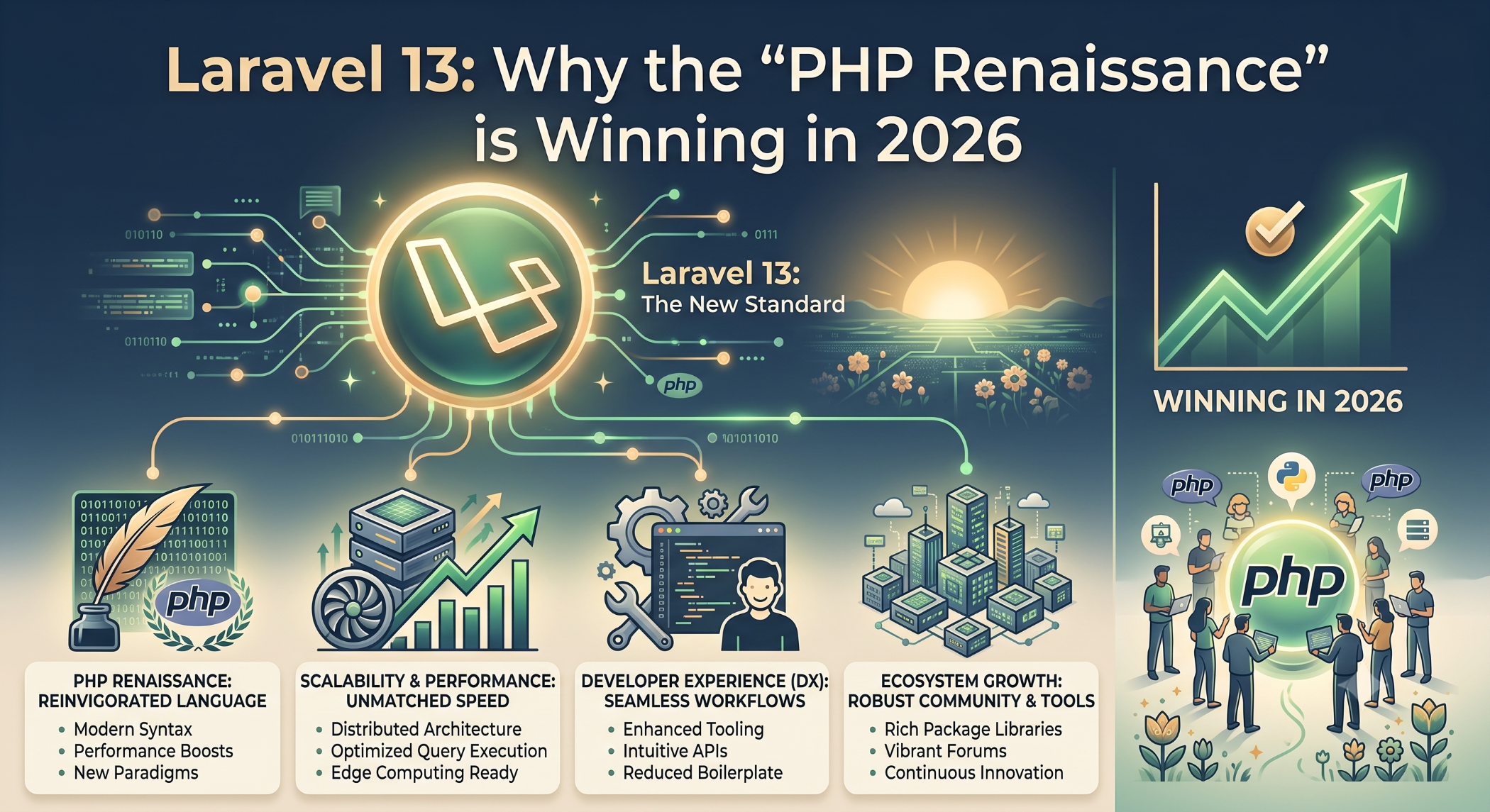
Laravel is one of the most widely adopted PHP frameworks. It provides features such as routing, authentication, ORM capabilities, queues, caching, and API development.
Symfony
Symfony is known for enterprise-grade applications, reusable components, and flexibility for large-scale projects.
CodeIgniter
CodeIgniter provides a lightweight framework option suitable for applications requiring simplicity and speed.
Yii
Yii offers strong performance and rapid application development capabilities.
Framework selection depends on project complexity, scalability requirements, team expertise, and long-term maintenance considerations.
Custom PHP and API Integrations
Modern business applications rarely operate in isolation.
Custom PHP applications frequently integrate with:
Salesforce
HubSpot
Stripe
PayPal
AWS services
Google APIs
Microsoft services
ERP platforms
Shipping providers
API integrations enable automation, data synchronization, and seamless business operations.
Security Best Practices
Security should be incorporated throughout the application lifecycle.
Important practices include:
Input validation
Prepared database statements
Secure authentication
Role-based access control
Encryption
Secure API communication
Dependency management
Regular updates
Security testing
Organizations running older PHP versions should also consider modernization strategies to address unsupported software and security risks.
Performance Optimization
A high-performing PHP application can improve user experience and operational efficiency.
Performance optimization may include:
Database optimization
Query tuning
Caching strategies
CDN integration
Load balancing
Queue processing
Cloud infrastructure optimization
Performance should be evaluated at both application and infrastructure levels.
Best Practices for Custom PHP Projects
For successful PHP development projects:
Define clear business requirements.
Design scalable architecture.
Use modern PHP versions.
Follow coding standards.
Implement automated testing.
Secure all application layers.
Monitor application performance.
Document APIs and business logic.
Plan for future scalability.
Maintain regular updates and support.
Conclusion
Custom PHP development remains a practical and powerful approach for building business-focused web applications, SaaS platforms, eCommerce solutions, APIs, and enterprise systems. With its mature ecosystem, modern frameworks, strong integration capabilities, and scalability, PHP continues to support organizations seeking flexible and tailored digital solutions.
When combined with proper architecture, security practices, performance optimization, and long-term maintenance planning, custom PHP development can provide a reliable foundation for business growth and digital transformation.