Introduction
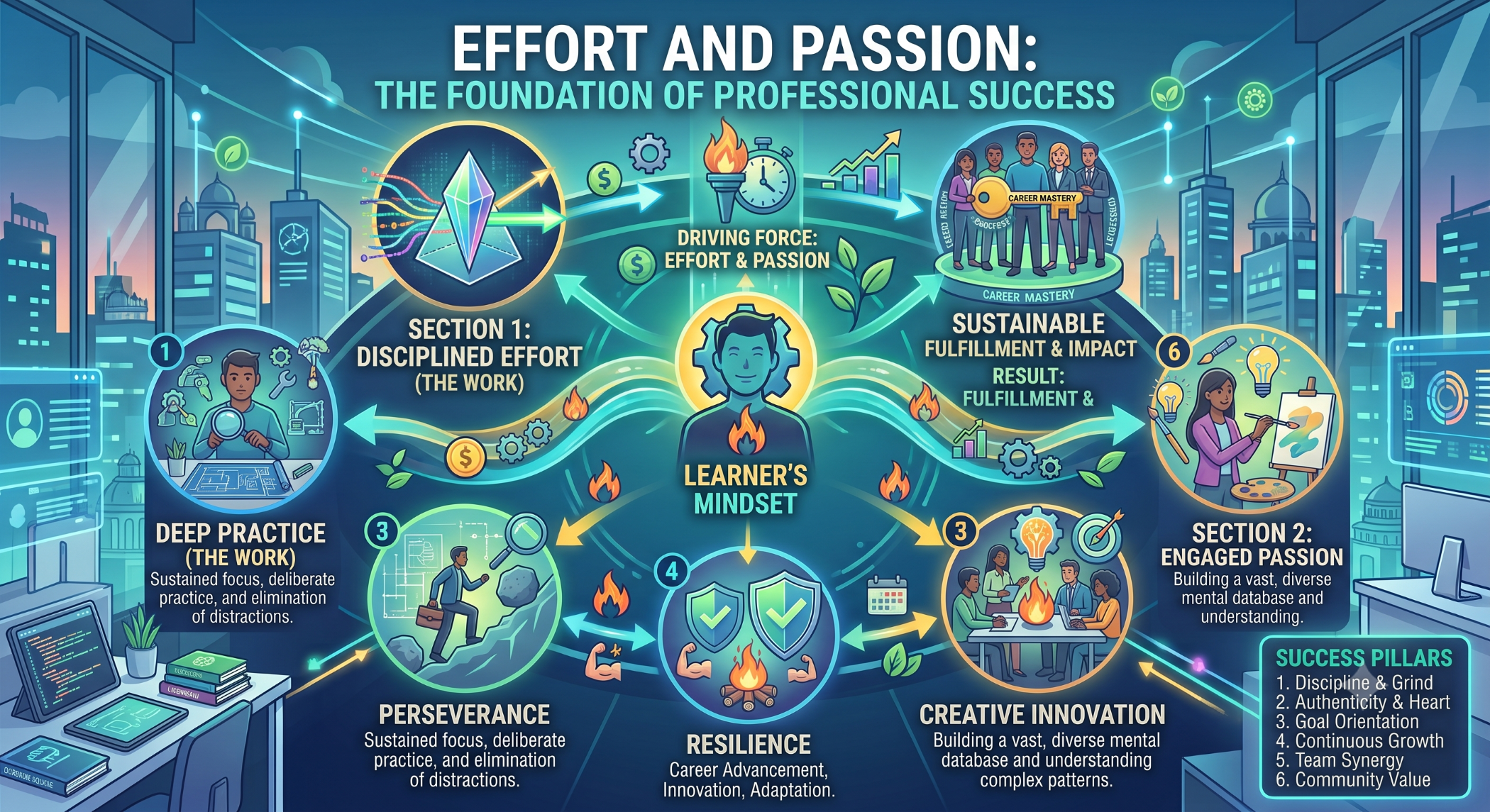
Success is often associated with talent, intelligence, or opportunity. However, two qualities that consistently contribute to meaningful achievement are effort and passion.
Passion creates enthusiasm and gives people a reason to continue pursuing something they value. Effort transforms that enthusiasm into action through discipline, persistence, and continuous improvement.
Whether it is software development, business, education, sports, or entrepreneurship, passion without effort can remain only an intention, while effort without passion can become difficult to sustain over the long term.
What Is Passion?
Passion is a strong interest or enthusiasm for a particular activity, subject, or goal.
In a professional environment, passion can encourage people to explore new ideas, learn continuously, and take greater ownership of their work.
A passionate developer may be interested in understanding how a technology works rather than simply completing an assigned task. A passionate designer may continuously look for ways to improve usability. A passionate business professional may actively search for better ways to serve customers.
Passion creates curiosity, and curiosity creates opportunities for learning.
What Is Effort?
Effort is the time, energy, discipline, and persistence invested in achieving an objective.
Having an idea is important, but execution requires effort.
A professional may want to learn a new programming language, build a product, or start a business. Turning that objective into reality requires regular practice, problem-solving, experimentation, and the ability to continue despite difficulties.
Effort is what converts goals into progress.
Why Passion and Effort Work Together
Passion and effort strengthen each other.
Passion provides the motivation to start and continue. Effort provides the action required to make progress.
Consider someone learning software development. Their passion may motivate them to explore programming beyond their formal responsibilities. Their effort helps them practice coding, build applications, study documentation, troubleshoot errors, and improve their skills.
Over time, the combination can create expertise.
Passion starts the journey; effort keeps it moving.
Passion Encourages Continuous Learning
Technology changes rapidly. New programming languages, frameworks, cloud platforms, artificial intelligence tools, and development approaches continue to emerge.
Professionals who are passionate about their field are more likely to remain curious and continue learning.
Continuous learning does not always require formal courses. It can involve reading technical documentation, experimenting with new tools, reviewing previous work, participating in technical discussions, or building small projects.
Passion makes learning feel less like an obligation and more like an opportunity.
Effort Builds Expertise
Expertise rarely develops through occasional effort.
It is built through repeated practice and experience.
A developer becomes stronger by solving different technical problems. A project manager develops expertise by managing different situations and learning from project outcomes. A salesperson improves by speaking with prospects, understanding objections, and refining the sales process.
Consistent effort allows professionals to learn from both success and failure.
Passion Helps During Difficult Times
Every career includes difficult periods.
Projects may face delays. Customers may have concerns. A solution may fail during testing. An important proposal may be rejected. A new business initiative may take longer than expected.
Passion can provide the motivation to continue during such periods.
However, passion should not be confused with simply working harder. Sustainable success also requires healthy priorities, effective processes, realistic expectations, and the ability to recognize when a different approach is needed.
Effort Requires Consistency
Large achievements are often built from small, repeated actions.
Spending time learning every day can be more effective than studying intensively once and then stopping. Regularly improving a product can be more valuable than making major changes only occasionally.
Consistency creates momentum.
Professionals should therefore focus not only on how much effort they can produce today, but also on whether they can maintain meaningful effort over the long term.
Passion in Software Development
Software development is an excellent example of where passion and effort can create professional growth.
Technology professionals often need to understand complex concepts, work through unexpected bugs, learn unfamiliar systems, and adapt to changing project requirements.
A strong interest in technology can encourage developers to investigate problems deeply rather than simply looking for the quickest workaround.
At the same time, passion must be supported by disciplined effort. Good software requires testing, documentation, code review, security considerations, maintenance, and attention to business requirements.
Effort and Passion in Business
The same principle applies to business.
Entrepreneurs and business leaders need a clear vision, but achieving that vision requires consistent execution.
Business growth can require customer research, product development, sales, marketing, hiring, financial planning, process improvement, and customer support.
Passion can help leaders remain committed to their vision, while effort ensures that the necessary activities are actually completed.
Learning From Failure
Failure can be an important part of the journey.
Not every idea will succeed. Not every implementation will work. Not every customer will say yes.
A useful response to failure is to understand what happened, identify what can be improved, and apply the lesson to the next attempt.
Passion helps maintain motivation, while effort turns lessons into improved action.
How to Develop More Passion
Passion can grow when people understand why their work matters.
Try to connect everyday tasks with a larger purpose. Learn more about the field rather than limiting yourself to assigned responsibilities. Experiment with new ideas. Seek opportunities to solve meaningful problems.
Working with experienced people can also increase interest and expose professionals to new perspectives.
Passion is often strengthened by progress. As people become more capable, they may enjoy their work more because they can solve increasingly challenging problems.
How to Increase Effort Effectively
More effort does not always mean longer working hours.
Effective effort means directing energy toward activities that produce meaningful results.
Clear goals can make effort more focused. Breaking a large objective into smaller tasks makes progress easier to measure. Prioritizing important work reduces wasted time.
It is also important to review results regularly. Effort should lead to learning and improvement rather than repetitive activity without measurable progress.
The Importance of Discipline
Passion can change from day to day. Discipline provides consistency.
There will be days when motivation is high and days when it is low. A disciplined professional continues to make progress even when enthusiasm temporarily decreases.
This is why long-term success usually depends on both emotional commitment and practical habits.
Passion gives you a reason to care. Discipline gives you a reason to continue.
Creating a Passionate and High-Performance Team
Organizations can also benefit from encouraging both passion and effort.
Employees should understand the purpose behind their work and how their contribution affects customers and business objectives.
Managers can support this by providing learning opportunities, recognizing meaningful contributions, encouraging ownership, and creating an environment where employees can share ideas.
At the same time, teams need clear goals, accountability, priorities, and effective processes. Passion alone cannot compensate for poor planning or unclear responsibilities.
A strong culture combines motivation with execution.
Conclusion
Effort and passion are powerful when they work together.
Passion creates interest, curiosity, and motivation. Effort provides the discipline, persistence, and action required to turn those qualities into results.
Professional success does not usually happen through one extraordinary moment. It is developed through continuous learning, repeated practice, thoughtful execution, and the willingness to keep improving.
When people genuinely care about what they do and consistently put meaningful effort into it, they create a strong foundation for personal growth, professional achievement, and long-term success.