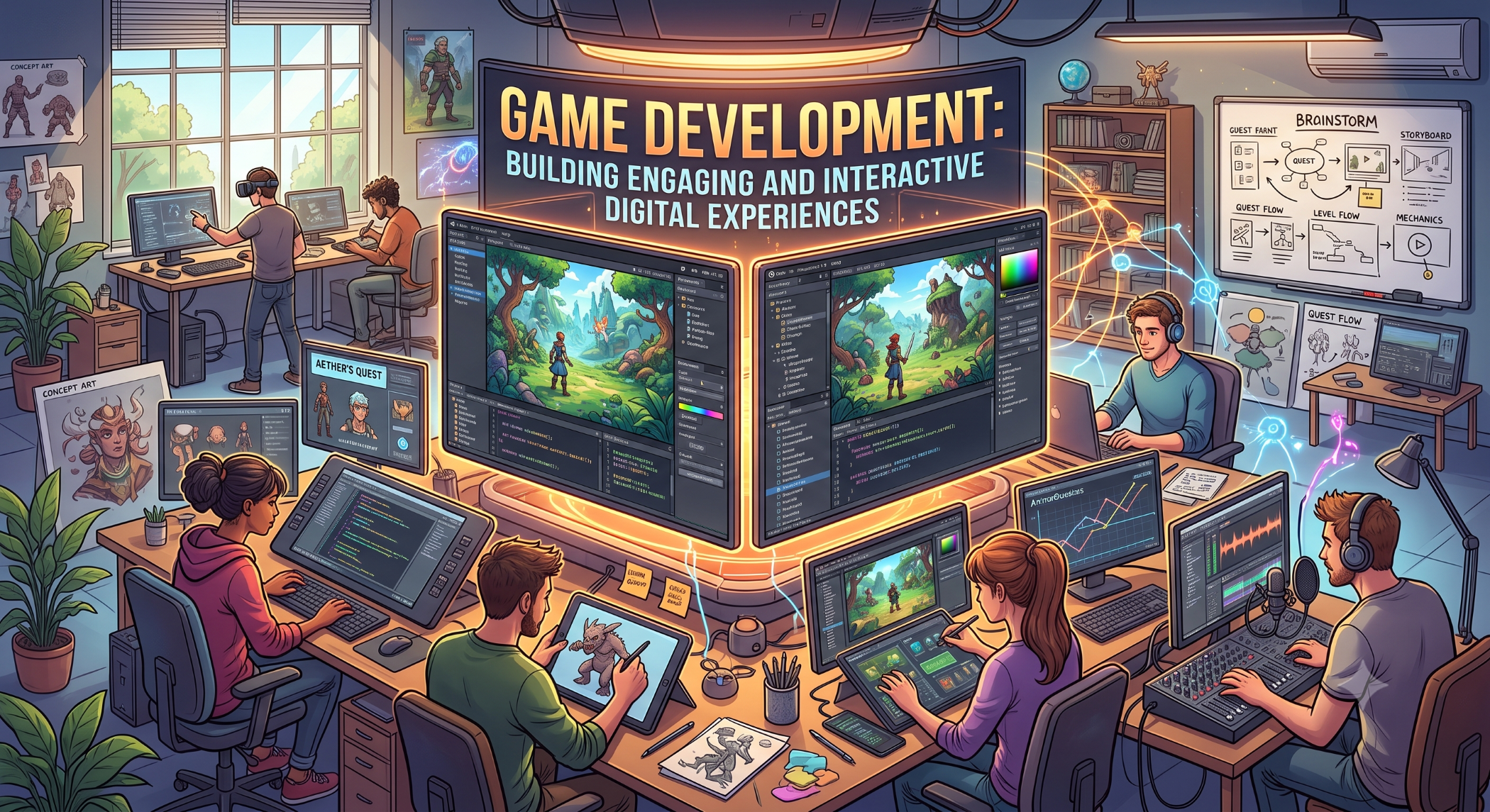
Game Development: Building Engaging and Interactive Digital Experiences
Games have evolved from simple entertainment products into sophisticated digital experiences that combine technology, creativity, storytelling, design, and user interaction.
Game development involves multiple disciplines, including game design, programming, graphics, audio, testing, and deployment. With the growth of smartphones, browsers, PCs, and other connected devices, businesses can use game development to create entertainment products, educational experiences, promotional applications, and interactive digital solutions.
What Is Game Development?
Game development is the process of designing, developing, testing, and publishing a game.
A typical development workflow includes:
Game Idea
↓
Game Design
↓
UI / UX & Graphics
↓
Programming
↓
Testing
↓
Deployment
↓
Updates & Maintenance
Each stage contributes to the final player experience.
Types of Games
Different games require different technologies and development strategies.
Mobile Games
Mobile games are designed for smartphones and tablets and can be developed for platforms such as Android and iOS.
They may include casual games, puzzle games, strategy games, educational games, and multiplayer experiences.
Web Games
Web-based games can run through supported browsers without requiring a traditional application installation.
HTML5, JavaScript, WebGL, and suitable game frameworks can be used to create browser-based gaming experiences.
Desktop Games
Desktop games are developed for platforms such as Windows, macOS, and Linux and can support more complex graphics and interaction models depending on the technology used.
Key Components of Game Development
Game Design
Game design defines how the game works.
It includes elements such as:
Rules
Levels
Characters
Challenges
Rewards
Player progression
A strong design should keep players engaged while providing clear objectives.
Game Programming
Programming brings the game mechanics and interactions to life.
Developers may implement:
Player movement
Collision detection
Scoring
Game logic
User input
Multiplayer functionality
Data management
The programming language and engine depend on the target platform and game requirements.
Graphics and Animation
Visual design plays an important role in creating an engaging game.
Depending on the project, a development team may work with 2D artwork, 3D models, animations, visual effects, and responsive interfaces.
Audio
Music, sound effects, and voice elements can contribute significantly to the overall gaming experience.
Audio should be integrated in a way that supports gameplay without negatively affecting performance.
Game Engines
Game engines provide reusable tools and technologies that can simplify development.
Popular engines include:
Unity
Unreal Engine
Godot
The right engine depends on factors such as platform requirements, graphics complexity, team expertise, performance expectations, and project budget.
Multiplayer Game Development
Multiplayer games introduce additional technical requirements.
Developers may need to manage:
Real-time communication
Player synchronization
Matchmaking
Authentication
Server-side game logic
Network latency
Anti-cheat mechanisms
A scalable backend architecture becomes especially important when many players need to connect simultaneously.
Game Development and Mobile Technology
Smartphones provide businesses with a broad platform for distributing games.
Mobile game development should consider screen sizes, device capabilities, battery usage, network conditions, touch controls, and operating-system behavior.
Performance optimization is especially important because mobile devices have different hardware capabilities.
Testing Games
Game testing goes beyond checking whether the application opens successfully.
Test teams should evaluate:
Gameplay mechanics
Controls
Performance
Different screen sizes
Device compatibility
Network conditions
Multiplayer scenarios
Crashes and unexpected behavior
Real-device testing can reveal issues that may not appear in development environments.
Monetization
Businesses can use different monetization models depending on the game's target audience.
Examples include:
Paid downloads
In-app purchases
Subscriptions
Advertising
Premium content
The monetization strategy should be designed alongside the game experience so it does not unnecessarily disrupt gameplay.
Game Development at Solace Infotech
Game development can combine Solace Infotech's capabilities across mobile applications, web development, backend systems, APIs, cloud technologies, and software product development.
The technology stack should be selected according to the game's platform, mechanics, graphics requirements, scalability, and business model.
Best Practices
Start with a clear game concept and define the target audience before development. Build a focused prototype to validate gameplay mechanics before investing heavily in production.
Optimize performance throughout development, test on real target devices, secure backend services, and plan for post-launch updates and maintenance.
Conclusion
Game development combines technology, creativity, design, and engineering to create interactive experiences that engage users.
Whether developing a mobile game, browser-based experience, or larger multiplayer product, success depends on choosing the right technology, designing enjoyable gameplay, optimizing performance, and continuously improving the product based on user feedback.
A well-planned development process can turn a creative game concept into a reliable and scalable digital product.