The new problem: candidates who aren’t who they say they are
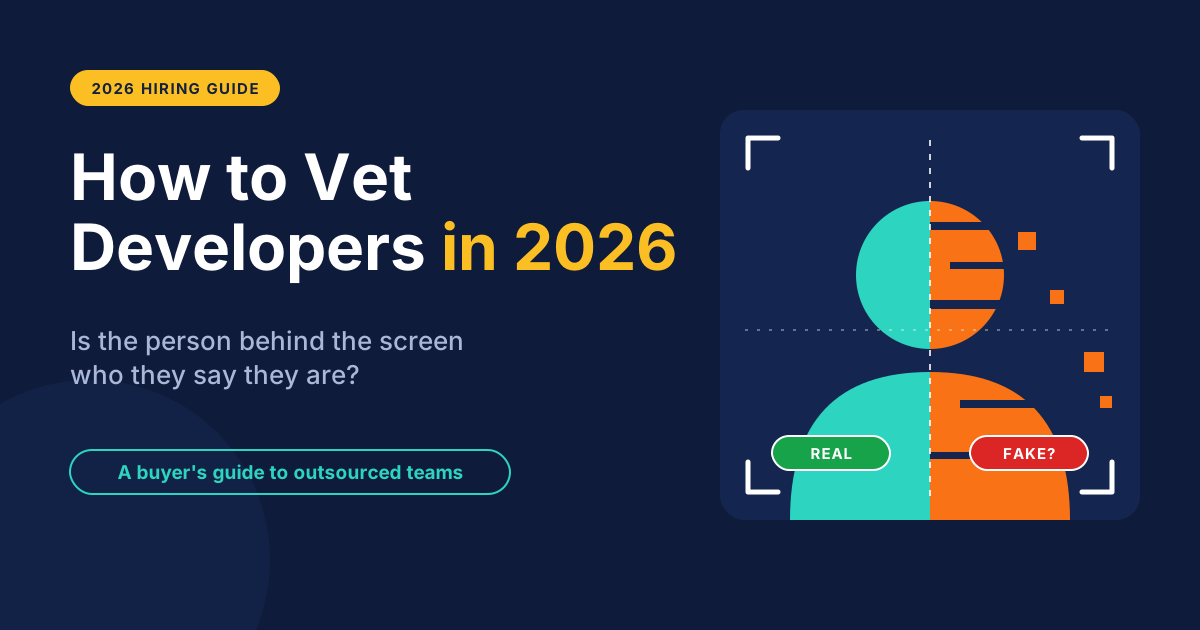
Experian named deepfake job candidates among the top five fraud threats of 2026, and Gartner predicts that by 2028, one in four job candidates globally could be entirely fake.
The best-documented case is North Korea’s remote-worker scheme. The US Department of Justice alleges that over 300 US companies unknowingly hired workers tied to North Korea, and Palo Alto Networks’ Unit 42 reports that these operatives are using real-time deepfake technology to get remote jobs. By October 2026, a security publication reported that they were also using AI, remote-control software and hired stand-ins to pass technical interviews.
For a business buying development services, the lesson is simple: you are trusting whoever is behind the screen with your code, data and systems.
The buyer’s checklist
1. Verify identity, not just skills.
Ask for live video with ID verification, check that the person’s location matches their work pattern, and be wary of cameras that “fail” or answers that arrive after odd delays.
2. Test in a real codebase.
Puzzle questions are easy to cheat with AI. Give candidates a small real task, then discuss their decisions.
3. Test with AI on and off.
You want to know whether they can think independently and whether they use AI tools responsibly. Surveys show that many developers don’t fully trust AI-generated code yet don’t always check it, so review habits matter as much as raw coding.
4. Check communication.
Many project failures come from misunderstood requirements, not bad code. Evaluate English, clarity and responsiveness.
5. Ask about security.
Look for recognized certifications, access controls, NDAs, and clear IP ownership terms in the contract.
6. Confirm who actually does the work.
Ask whether the person you interviewed is the person who will write your code. Stand-in interviews are exactly how this fraud works.
7. Get a trial period and a replacement guarantee.
A short paid trial reduces risk. SHRM estimates that replacing a failed hire costs between 50% and 200% of annual salary, so this is worth negotiating.
8. Watch what happens after hiring.
Monitor access and anything unusual in payments or account activity, as the July 2026 warning recommended.
Red flags
-
A candidate refuses to switch cameras on or turn off background filters
-
Resume details that don’t match the interview
-
Unwillingness to meet in different settings or over different channels
-
Pressure to skip identity checks or rush onboarding
How Solace Infotech applies this checklist
At Solace Infotech, every step above is part of how we place developers with clients. We verify identity on live video before anyone joins a project, and we assess skills on real tasks, both with and without AI tools. We check communication in every interview, and we keep security controls, NDAs and clear IP terms in every contract . The developer you interview is the developer who works on your project, and we offer a trial period and a replacement guarantee. We also monitor access after onboarding, so you don’t have to rely on a single check at the start.