Hybrid App Development: Building Cross-Platform Mobile Applications
Businesses often want to launch mobile applications for both Android and iOS without maintaining completely separate development projects. Hybrid app development addresses this requirement by allowing developers to build applications using a shared codebase and deploy them across multiple platforms.
Solace Infotech lists hybrid application development, design, integration, and maintenance among its mobile application services.
What Is a Hybrid App?
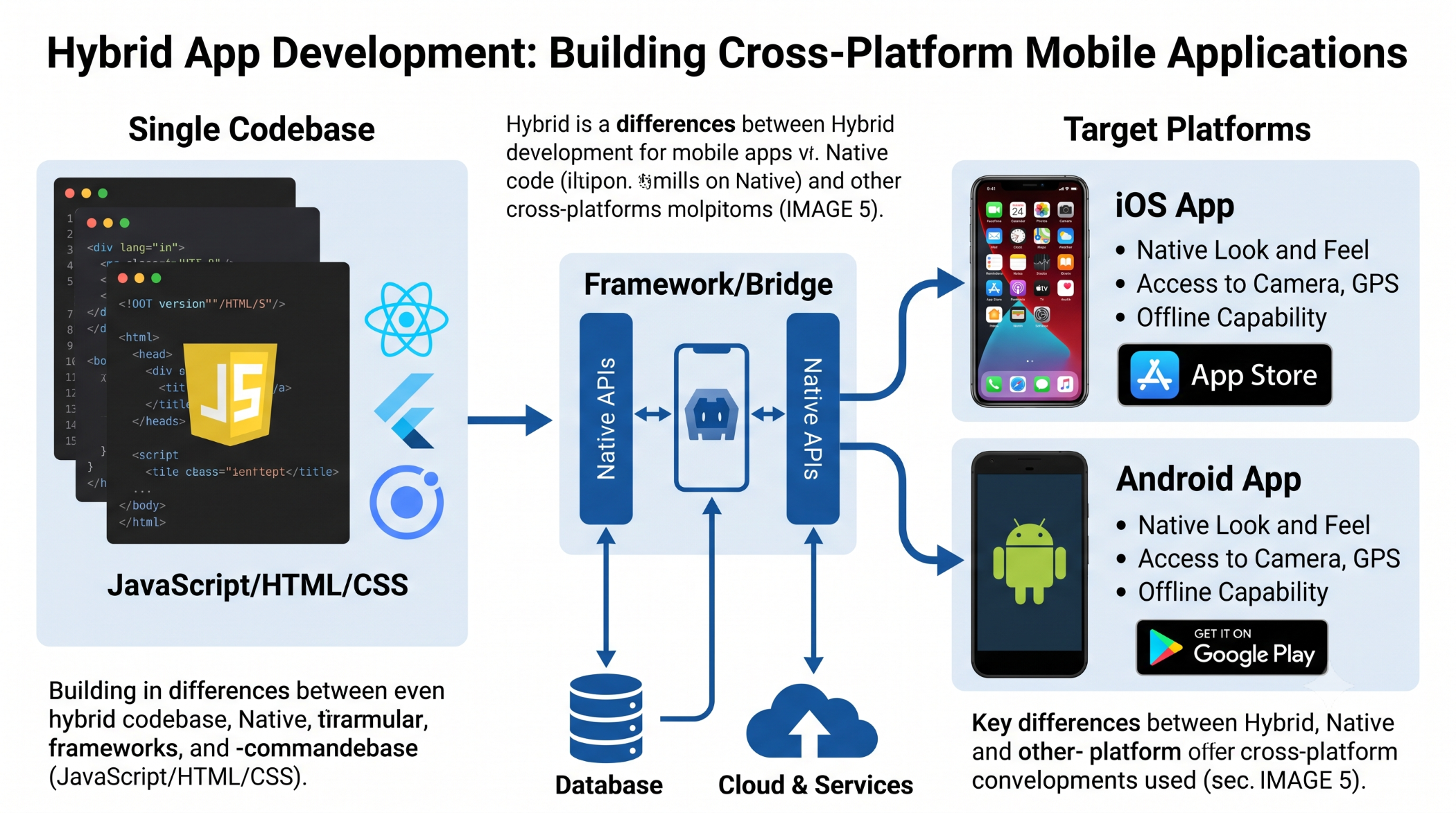
A hybrid app combines web technologies with a native mobile application wrapper.
Developers can use technologies such as HTML, CSS, and JavaScript to build parts of the application and package the application for mobile platforms.
This allows much of the code to be shared between Android and iOS.
Benefits of Hybrid App Development
Cross-Platform Development
A shared codebase can reduce the effort required to develop similar functionality for multiple platforms.
Faster Development
Developers can reuse components and application logic instead of maintaining completely separate implementations.
Lower Development Cost
Code reuse can reduce development and maintenance effort, particularly for businesses targeting multiple platforms.
Easier Maintenance
Bug fixes and improvements can often be applied to shared code, reducing duplicated work.
Hybrid Apps and Native Apps
Native applications are developed specifically for a particular platform, such as Android or iOS.
Hybrid applications aim to provide cross-platform support through a shared development approach.
Native development can be preferable when an application requires highly platform-specific functionality or maximum native performance. Hybrid development can be attractive when speed, cross-platform reach, and code reuse are more important.
When Should You Choose Hybrid Development?
Hybrid development can be a good choice for:
- Business applications
- E-commerce apps
- Content-based applications
- Internal enterprise apps
- Applications targeting Android and iOS
The technology should ultimately be selected based on functionality, performance requirements, device capabilities, budget, and long-term maintenance needs.
Best Practices
Start with a clear understanding of platform-specific requirements. Test the application on real Android and iOS devices, optimize performance, and ensure that the user interface provides a consistent but platform-appropriate experience.
Choose a well-supported framework and plan for ongoing maintenance as mobile operating systems evolve.
Conclusion
Hybrid app development provides an efficient approach for businesses that want to reach multiple mobile platforms while maximizing code reuse.
It can reduce development effort and simplify maintenance, but it is not the ideal solution for every application. The right choice depends on the project's functionality, performance expectations, target platforms, budget, and future growth