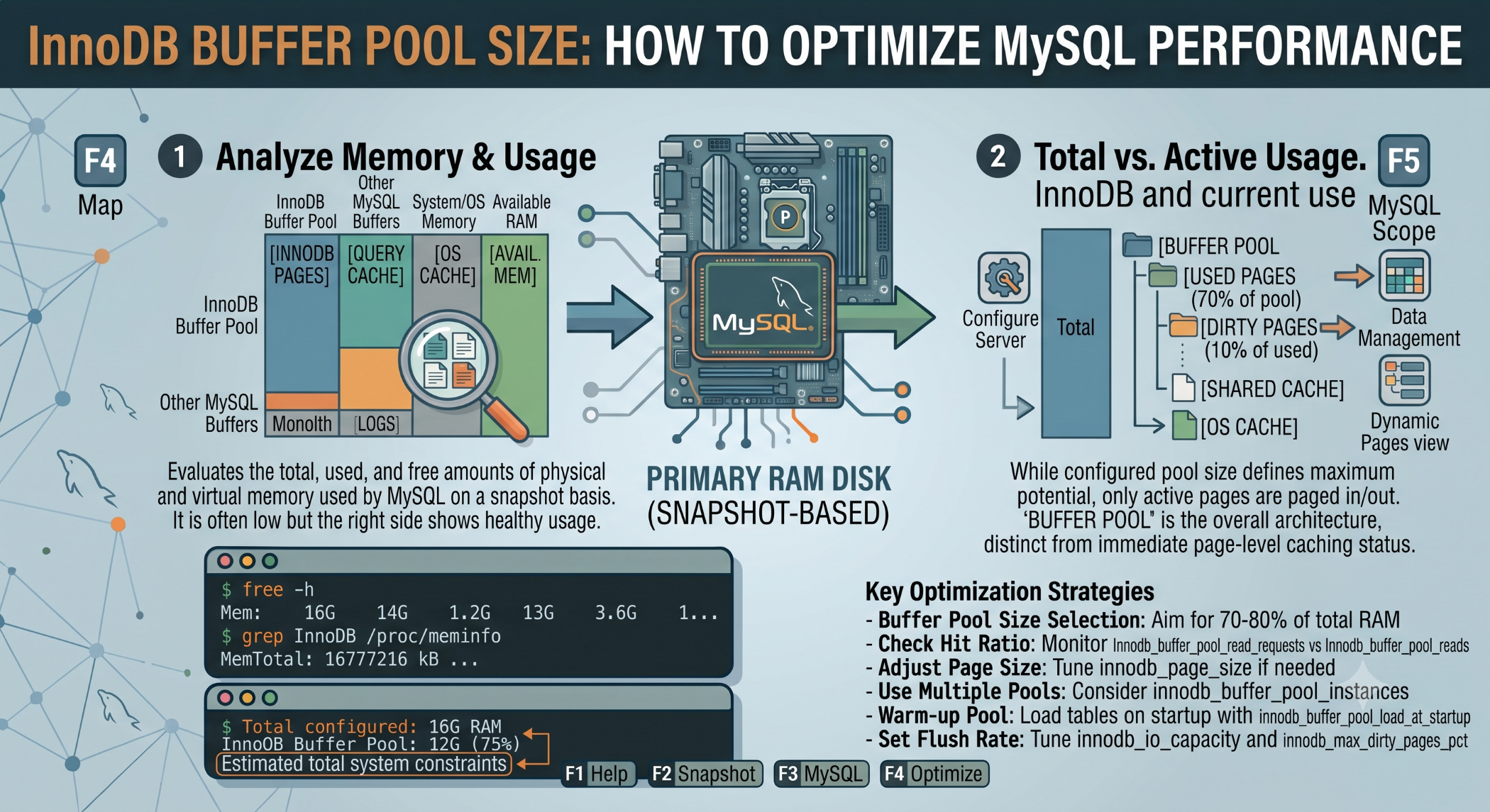
InnoDB Buffer Pool Size: How to Optimize MySQL Performance
MySQL performance depends heavily on how efficiently data can be read from and written to storage. For databases using the InnoDB storage engine, the buffer pool plays a central role in improving performance.
The innodb_buffer_pool_size variable controls the amount of memory allocated to the InnoDB buffer pool. MySQL uses this memory to cache frequently accessed data and indexes, reducing the need for repeated disk I/O. (dev.mysql.com)
What Is the InnoDB Buffer Pool?
The InnoDB buffer pool is an area of memory where InnoDB caches database data and indexes.
When requested data is already available in the buffer pool, MySQL can often access it from memory instead of reading it from disk.
This can significantly improve database performance, especially for frequently accessed tables.
What Is innodb_buffer_pool_size?
The setting determines how much memory InnoDB can use for its buffer pool.
You can check the current value with:
SHOW VARIABLES LIKE 'innodb_buffer_pool_size';A larger buffer pool can keep more frequently used data in memory, but allocating too much memory can leave insufficient RAM for the operating system and other services.
Why Is the Buffer Pool Important?
A properly sized buffer pool can help:
- Reduce disk I/O.
- Improve query performance.
- Cache frequently accessed data.
- Improve overall InnoDB throughput.
For database servers dedicated primarily to MySQL, allocating a substantial portion of available memory to the buffer pool is common, but the exact value depends on the workload and what else runs on the server. (dev.mysql.com)
How to Set the Buffer Pool Size
In MySQL configuration, the setting can be specified in my.cnf or mysqld.cnf:
[mysqld]
innodb_buffer_pool_size=4G
After changing the configuration, restart MySQL when required by the version and configuration method being used.
Choosing the Right Size
There is no single value that works for every server.
Consider:
- Total system RAM.
- Database size.
- Query workload.
- Number of concurrent users.
- Other services running on the server.
- Operating-system memory requirements.
The goal is to keep frequently accessed database data in memory without starving other processes.
Monitor Before Optimizing
Changing innodb_buffer_pool_size should be based on actual workload data.
Monitor memory usage, disk I/O, query performance, and InnoDB statistics before and after changes. This helps determine whether the new configuration is actually improving performance.
Conclusion
innodb_buffer_pool_size is a critical MySQL configuration parameter for InnoDB performance. The buffer pool keeps frequently used data and indexes in memory, helping reduce expensive disk operations.
The best configuration depends on the server's available memory and workload. Instead of choosing a value blindly, monitor the database and adjust the buffer pool based on real performance requirements.