Layoffs in the IT Industry: Understanding Causes, Impact, and Recovery
The technology industry can experience periods of rapid growth followed by changing market conditions, reduced demand, restructuring, or economic uncertainty. During such periods, companies may make difficult decisions about their workforce, including layoffs.
A layoff can affect employees directly, but it can also influence organizational culture, productivity, customer confidence, and long-term business strategy.
What Is a Layoff?
A layoff occurs when an employee's position is eliminated by an organization, typically for business reasons rather than because of individual performance.
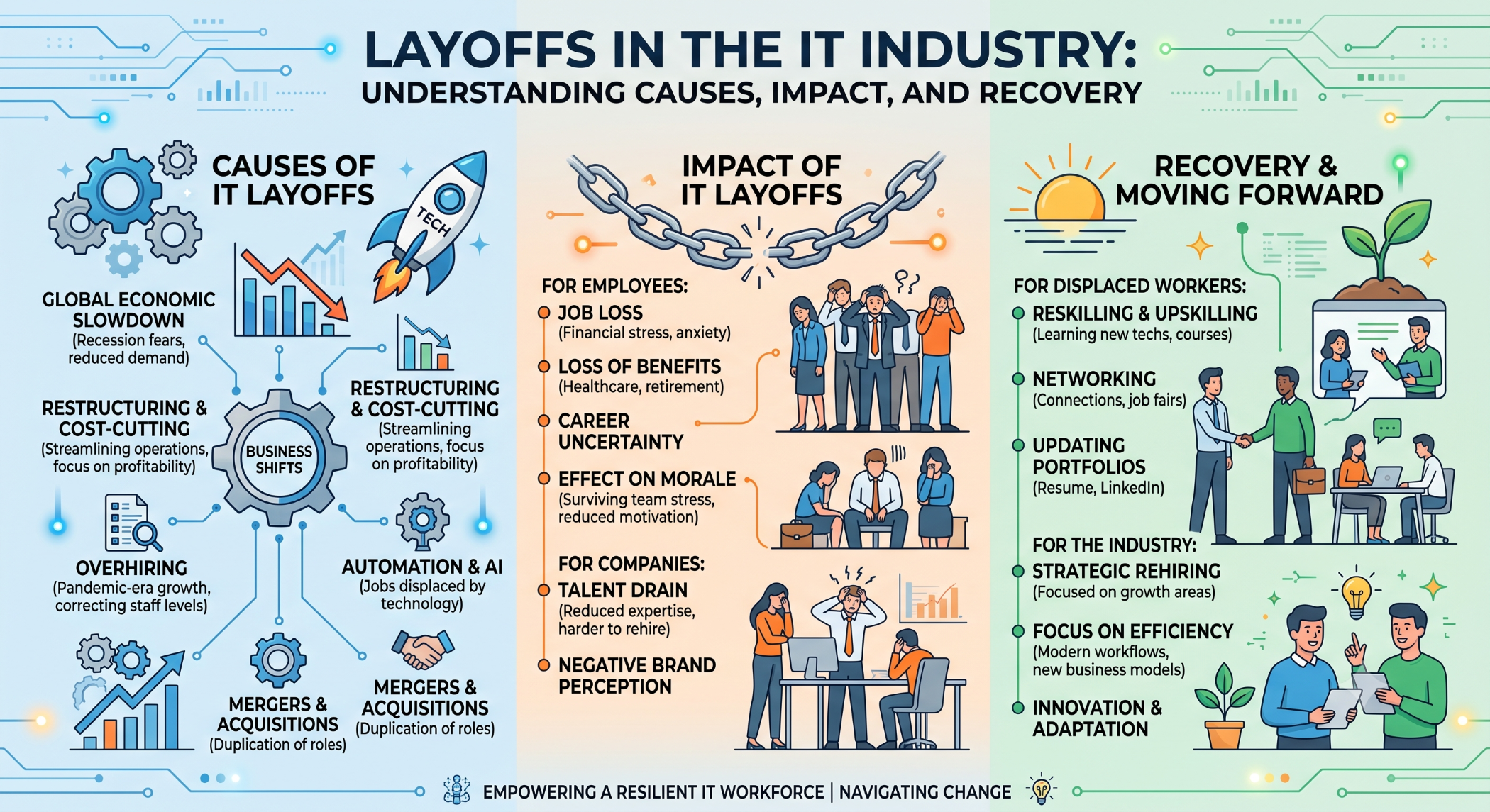
In the technology industry, layoffs may happen because of:
- Reduced business demand.
- Project cancellations.
- Organizational restructuring.
- Cost reduction.
- Mergers or acquisitions.
- Changes in technology requirements.
- Shifts in business strategy.
A layoff is different from performance-based termination because the position itself may no longer be required.
Why Do Technology Companies Conduct Layoffs?
Technology companies often operate in rapidly changing markets. A business may hire aggressively during a period of high demand and later need to adjust its workforce when demand changes.
For example, if a company has fewer client projects than expected, maintaining the same workforce may become financially difficult.
Similarly, automation or changes in technology may alter the skills and roles a business requires.
Impact on Employees
Layoffs can create financial and professional uncertainty for affected employees.
Employees may need to:
- Search for new opportunities.
- Update their skills.
- Reassess their career goals.
- Expand their professional network.
- Adapt to changing technology requirements.
Organizations should handle workforce reductions with professionalism, transparency, and respect.
Impact on Remaining Employees
Layoffs can also affect employees who remain with the organization.
They may experience uncertainty, increased responsibilities, or concern about future workforce decisions.
Leadership should communicate clearly about organizational changes, responsibilities, business priorities, and expectations to help rebuild confidence.
Impact on Business Operations
Reducing the workforce can lower costs, but layoffs can also create operational challenges.
Businesses may lose:
- Domain knowledge
- Technical expertise
- Project continuity
- Customer relationships
- Institutional knowledge
For this reason, workforce planning should consider both short-term financial requirements and long-term business capabilities.
Layoffs vs Workforce Optimization
Not every workforce change needs to involve layoffs.
Organizations can also consider alternatives such as:
- Reskilling employees.
- Moving employees to different projects.
- Reducing unnecessary operational costs.
- Improving resource utilization.
- Expanding sales efforts.
- Adjusting hiring plans.
- Increasing internal mobility.
A balanced approach can sometimes preserve valuable skills while addressing financial or operational challenges.
Role of Technology and Automation
Automation and Artificial Intelligence are changing how businesses operate. Some repetitive tasks can increasingly be handled by software, while demand for skills related to AI, cloud, data, cybersecurity, and modern application development continues to evolve.
Businesses should therefore focus not only on reducing headcount but also on reskilling and redeploying employees where practical.
How Companies Can Handle Layoffs Responsibly
A responsible workforce-reduction process should include clear communication, appropriate notice and compensation according to applicable requirements, orderly knowledge transfer, and professional support for affected employees.
Leaders should also communicate what the changes mean for the future of the organization.
Building a Resilient Workforce
Companies can reduce the impact of market fluctuations by maintaining flexible teams, investing in employee skills, improving resource allocation, and maintaining a healthy balance between hiring and business demand.
Employees can improve career resilience by continuously developing skills and staying adaptable as technology evolves.
Conclusion
Layoffs are difficult for both employees and organizations. While workforce reductions may sometimes be necessary because of business conditions, they should be approached carefully and responsibly.
For technology companies, long-term resilience depends on effective workforce planning, continuous learning, resource optimization, and the ability to adapt to changing market and technology requirements.
The goal should not simply be to reduce costs during difficult periods, but to build an organization that can respond effectively to future opportunities and challenges.