Introduction
Every organization needs a clear understanding of why it exists and what it wants to achieve.
This purpose is expressed through its mission.
A business mission communicates the organization's core purpose, the value it aims to create, and the people or markets it intends to serve. It helps employees understand the bigger picture and gives leadership a framework for making decisions.
For a technology company, a strong mission can connect technology expertise with real business outcomes, customer needs, innovation, and long-term growth.
What Is a Business Mission?
A mission describes the fundamental purpose of an organization.
It answers questions such as:
Why does the company exist?
What does it provide?
Who does it serve?
What value does it aim to create?
A mission should be meaningful but practical. It should provide enough direction to influence everyday decisions while remaining broad enough to support future growth.
Why a Mission Matters
A clear mission helps bring people together around a common purpose.
Without a shared direction, different departments may focus only on their own objectives. Sales may focus on acquiring customers, development may focus on completing features, and operations may focus on processes without a common understanding of the broader outcome.
A mission creates alignment.
When employees understand how their work contributes to the organization's purpose, individual responsibilities become connected to a larger goal.
Mission and Vision Are Different
Mission and vision are closely related, but they serve different purposes.
A mission explains what an organization does and why it exists today.
A vision describes the future the organization wants to create.
For example, a technology company's mission might focus on delivering reliable digital solutions that help businesses solve practical problems. Its vision might describe becoming a trusted technology partner known for innovation and business impact.
The mission provides present-day direction, while the vision provides a future-oriented aspiration.
Mission and Business Strategy
A mission should influence business strategy.
Companies make decisions about markets, services, technologies, investments, partnerships, hiring, and product development.
A clear mission can help leaders determine whether an opportunity supports the organization's purpose.
For example, a technology company focused on solving complex business problems may prioritize projects that involve meaningful digital transformation rather than accepting every available technical assignment.
The mission becomes a filter for strategic decisions.
Mission and Employees
Employees need more than a list of tasks. They benefit from understanding why those tasks matter.
A clear mission can help employees connect their daily work with broader organizational objectives.
A developer may understand that building a particular feature is not simply a coding activity; it contributes to improving the customer's business process.
A project manager may understand that timely communication and effective coordination directly support the company's commitment to delivering value.
This connection can create greater ownership and purpose.
Mission and Company Culture
A mission works best when it is supported by company culture.
The way people communicate, collaborate, make decisions, handle challenges, and serve customers should reflect the organization's stated purpose.
For example, a company that claims its mission is to deliver high-quality digital solutions should establish processes that support quality rather than rewarding speed alone.
Similarly, a company focused on customer success should ensure that employees understand customer needs and are encouraged to raise issues that could affect outcomes.
Mission and Customers
Customers ultimately experience an organization's mission through its products, services, and interactions.
A technology company should therefore ensure that its mission translates into tangible customer value.
Customers may experience this through reliable software, responsive communication, thoughtful problem solving, strong technical expertise, or innovative solutions tailored to their needs.
A mission becomes meaningful when customers can see its impact rather than simply read it on a company website.
Creating a Strong Mission Statement
An effective mission statement does not need to be complicated.
It should communicate the organization's purpose clearly and avoid unnecessary corporate language.
A useful mission statement can focus on:
Who we serve
What we provide
How we create value
Why our work matters
The best statements are easy for employees to remember and easy for customers to understand.
Mission in a Technology Company
Technology companies operate in a fast-changing environment.
Programming frameworks evolve, artificial intelligence capabilities expand, cloud platforms develop, and customer expectations change.
A strong mission can provide stability even when technology changes.
The tools may change, but the underlying purpose can remain consistent.
For example, a company may move from traditional web development to cloud, mobile, AI, or automation solutions while continuing to focus on helping businesses solve problems through technology.
Mission and Innovation
Innovation should support the mission rather than exist simply for its own sake.
Technology organizations have access to many emerging technologies. However, adopting a new technology is not automatically innovation.
Innovation becomes valuable when it helps solve a problem more effectively, improve customer experience, reduce operational effort, or create new business opportunities.
A clear mission helps teams evaluate whether new ideas contribute to meaningful outcomes.
Mission and Decision-Making
Organizations make countless decisions every day.
Not all decisions are covered by detailed policies.
A strong mission provides a guiding principle.
When considering a new product, market, technology, or partnership, leaders can ask whether the decision supports the organization's purpose.
This can simplify decision-making and improve consistency across different teams.
Mission and Accountability
A mission also creates accountability.
If an organization publicly commits to delivering value, employees and leaders should evaluate whether their actions support that commitment.
For example, if customer success is central to the mission, repeatedly ignoring customer concerns would represent a gap between the organization's stated purpose and its actual behavior.
Accountability ensures that the mission remains connected to reality.
Mission and Team Collaboration
Different departments can use the mission as a shared reference point.
Sales, delivery, development, QA, HR, marketing, finance, and leadership may have different responsibilities, but they contribute to the same overall purpose.
A shared mission can reduce siloed thinking and encourage teams to consider the organization-wide impact of their decisions.
Mission and Business Growth
Growth should not come at the expense of the organization's purpose.
Rapid expansion can create pressure to accept unsuitable projects, compromise quality, or change processes too quickly.
A strong mission helps businesses maintain focus during periods of growth.
It can guide hiring, customer selection, service expansion, and investment decisions.
Mission and Continuous Improvement
A mission should not prevent change.
Instead, it provides a consistent purpose while allowing methods to evolve.
Organizations should regularly evaluate whether their processes, products, and services are still the best ways to achieve their mission.
Continuous improvement may involve improving internal processes, adopting better technologies, restructuring teams, strengthening quality practices, or introducing new services.
The mission remains the destination while the methods evolve.
Mission at Solace Infotech
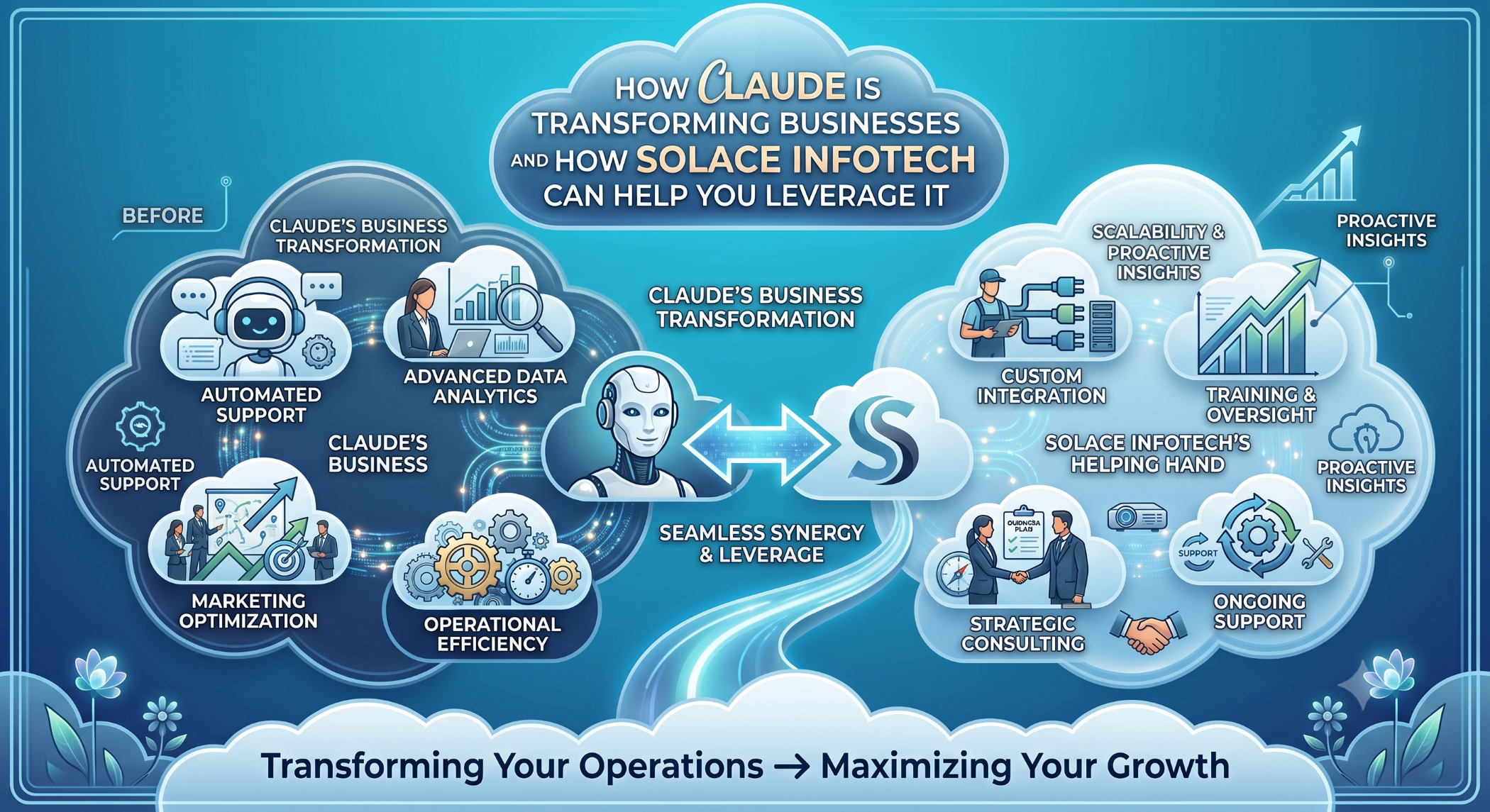
Solace Infotech presents itself as a technology services organization focused on helping businesses transform through software and digital solutions. Its public company information emphasizes technology expertise, customer-oriented delivery, innovation, and long-term relationships. (solaceinfotech.com)
A mission within this context provides a useful connection between technical capabilities and the business outcomes those capabilities are intended to create.
How Leaders Can Communicate the Mission
Leaders should communicate the mission regularly rather than mentioning it only during onboarding.
It can be reinforced through team meetings, project objectives, performance discussions, recognition programs, strategic planning, and customer conversations.
Most importantly, leadership decisions should consistently demonstrate the mission.
Employees are more likely to believe a mission when they see it reflected in actual business behavior.
Common Mistakes With Mission Statements
One common mistake is creating a mission that is too vague.
Statements such as “We aim to be the best company in the world” provide little practical direction.
Another mistake is making the mission too narrow, limiting the organization to a particular technology or temporary market.
A third mistake is failing to connect the mission with everyday behavior.
A mission should be clear, relevant, credible, and actionable.
Turning a Mission Into Action
The most important step is implementation.
A mission should influence:
Strategy: Which opportunities should we pursue?
People: What skills and behaviors do we need?
Products and services: What value are we creating?
Processes: How should we work?
Customer relationships: How should we communicate and deliver?
Culture: What behaviors should we encourage?
When the answers consistently support the mission, the statement becomes part of the organization's operating model.
Conclusion
A mission gives a company purpose and direction.
It helps employees understand why their work matters, gives leaders a framework for strategic decisions, aligns departments, and communicates the organization's purpose to customers.
For technology companies, a strong mission is especially valuable because technologies and market conditions change rapidly. The mission can provide continuity while allowing the organization to adopt new technologies and approaches.
A mission is not simply a sentence written for a website or company presentation. Its real value comes when it influences decisions, behaviors, products, services, and customer relationships.
When an organization consistently turns its mission into action, purpose becomes a powerful foundation for trust, alignment, innovation, and sustainable growth.