Mobile Apps: Building Powerful Digital Experiences for Modern Businesses
Smartphones have become an important part of everyday life, making mobile apps a valuable channel for businesses to connect with customers and manage operations. From e-commerce and banking to healthcare and enterprise applications, mobile apps can support a wide range of business requirements.
A successful mobile app should combine useful functionality with a simple interface, reliable performance, security, and a strong technical foundation.
Why Mobile Apps Matter for Businesses
A mobile application can provide businesses with a direct digital channel for interacting with customers.
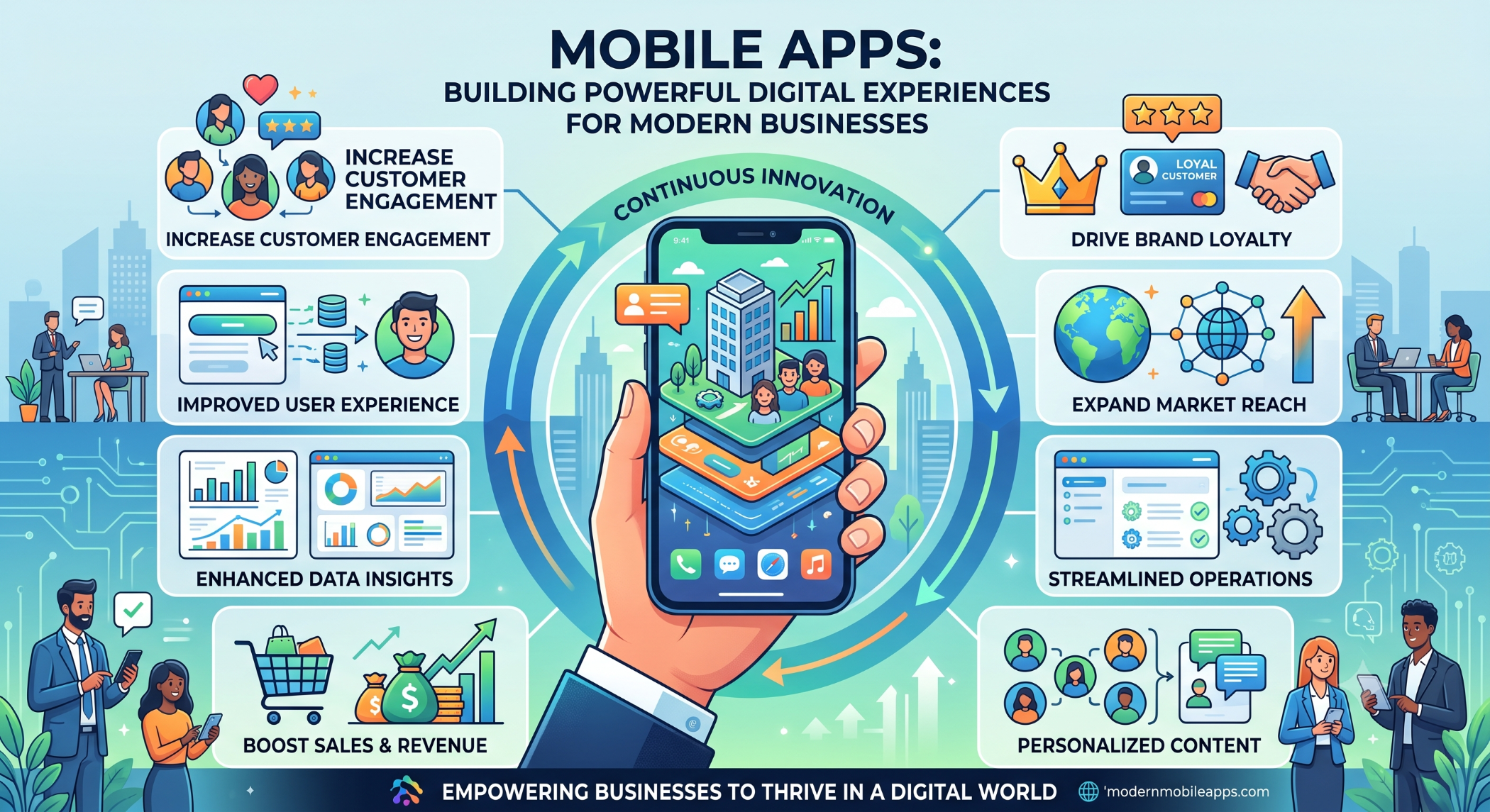
Businesses can use mobile apps to:
- Improve customer engagement.
- Provide faster access to products and services.
- Automate business processes.
- Send timely notifications.
- Collect useful customer insights.
- Create new digital revenue opportunities.
Types of Mobile Apps
Different business requirements call for different development approaches.
Native Mobile Apps
Native apps are developed specifically for Android or iOS. They can provide strong performance and deep access to platform-specific capabilities.
Hybrid Mobile Apps
Hybrid applications use a shared development approach to support multiple platforms. They can reduce duplicated development effort when similar functionality is required across Android and iOS.
Progressive Web Apps
PWAs provide an app-like experience through web technologies. They can be useful when businesses want broad web accessibility along with selected application-style capabilities.
Key Features of a Successful Mobile App
User-Friendly Design
The interface should make it easy for users to understand the application and complete their tasks.
Clear navigation, readable content, responsive layouts, and consistent interactions can significantly improve usability.
Performance
Slow screens and unresponsive interactions can negatively affect the user experience.
Applications should optimize API calls, data processing, images, network requests, and other performance-sensitive operations.
Security
Mobile applications may handle personal information, credentials, payments, and business data.
Secure authentication, encrypted communication, appropriate authorization, safe data storage, and secure API implementation should be considered throughout development.
Scalability
The application should be capable of supporting future growth in users, data, and functionality.
A well-structured architecture can make it easier to introduce new features without requiring major redevelopment.
Mobile App Development Process
A typical mobile app development process includes:
Requirement Analysis
        ↓
UI/UX Design
        ↓
Architecture & Development
        ↓
Testing
        ↓
Deployment
        ↓
Maintenance & Updates
Clear requirements at the beginning can reduce rework and help the development team focus on the features that deliver the most value.
Choosing the Right Technology
Technology selection should be based on the application rather than trends.
Consider:
Target platforms: Android, iOS, or both.
Required device features: Camera, GPS, Bluetooth, biometrics, notifications, and sensors.
Performance requirements: Basic business applications have different requirements from gaming or graphics-intensive products.
Budget and timeline: Cross-platform development may reduce duplicated work in some projects.
Long-term maintenance: Consider how the application will be updated and supported as mobile operating systems evolve.
Mobile Apps at Solace Infotech
Solace Infotech provides mobile application development capabilities across Android, iOS, native, hybrid, Flutter, and React Native technologies.
The company supports businesses with mobile application design, development, integration, testing, deployment, and ongoing maintenance based on project requirements.
Best Practices
Start with a clear business objective and prioritize the features that users actually need. Design for different screen sizes, test on real devices, secure APIs and sensitive data, and monitor application performance after launch.
Regular updates are also important because devices, operating systems, dependencies, and user expectations continue to change.
Conclusion
Mobile apps can become an important part of a business's digital strategy when they solve genuine customer or operational problems.
The strongest applications combine good user experience, reliable performance, strong security, appropriate technology, and continuous improvement.
Whether a business needs a native application, hybrid solution, or cross-platform mobile product, the right approach should be selected according to its goals, users, functionality, budget, and long-term growth plans.