PHP: A Powerful Language for Modern Web Development
Web applications need a reliable server-side technology to process requests, manage data, handle business logic, and communicate with databases. PHP is a server-side scripting language widely used for building dynamic websites and web applications.
Its mature ecosystem, frameworks, libraries, and database support make PHP suitable for a wide range of development projects.
What Is PHP?
PHP is a server-side scripting language designed for web development. PHP code runs on the server and generates a response that can be delivered to the user's browser.
A simple PHP example is:
<?php

$name = "John";

echo "Welcome, " . $name;
PHP can be used to generate dynamic content based on user input, database information, application logic, and other conditions.
Why Is PHP Popular?
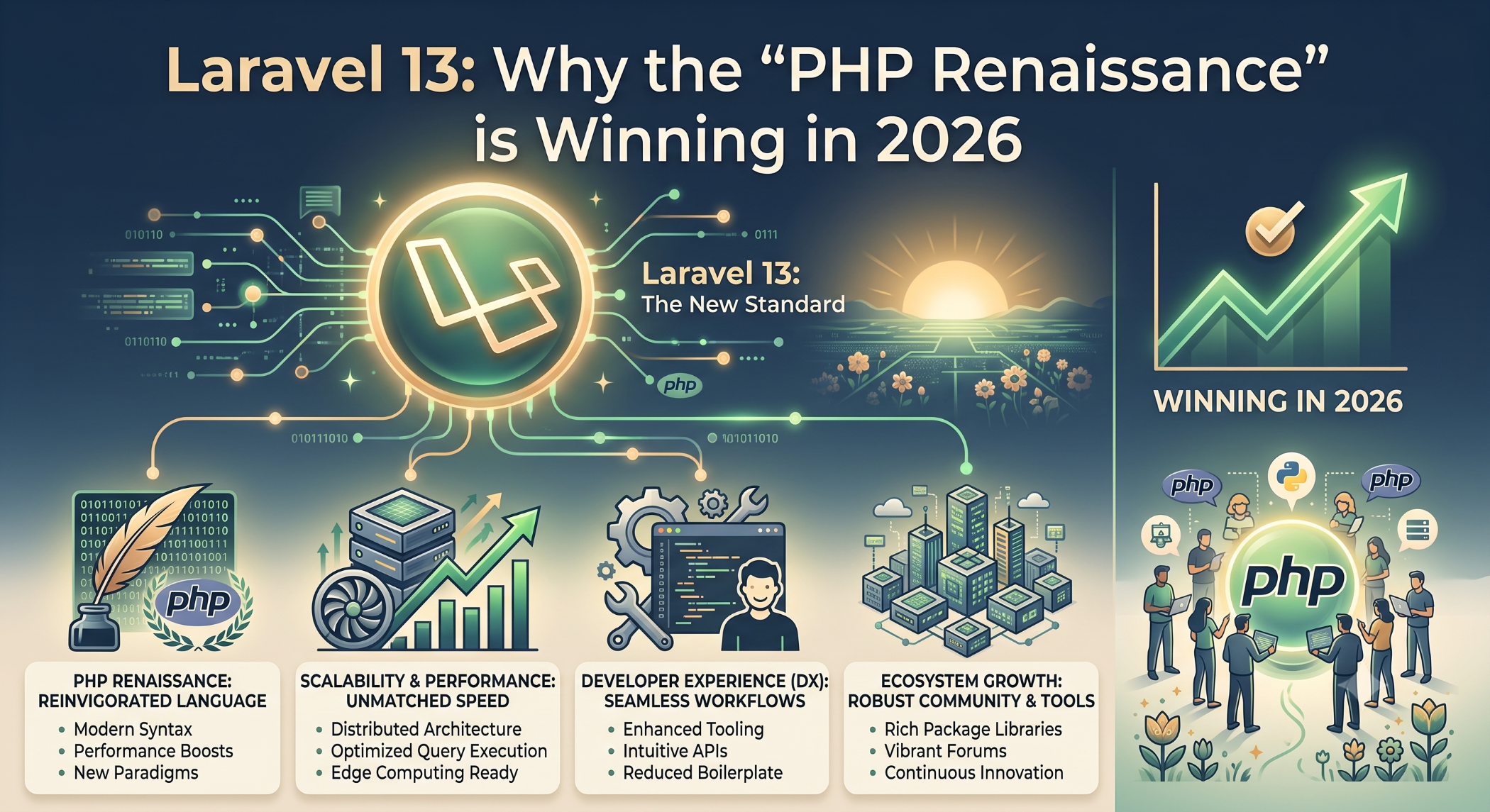
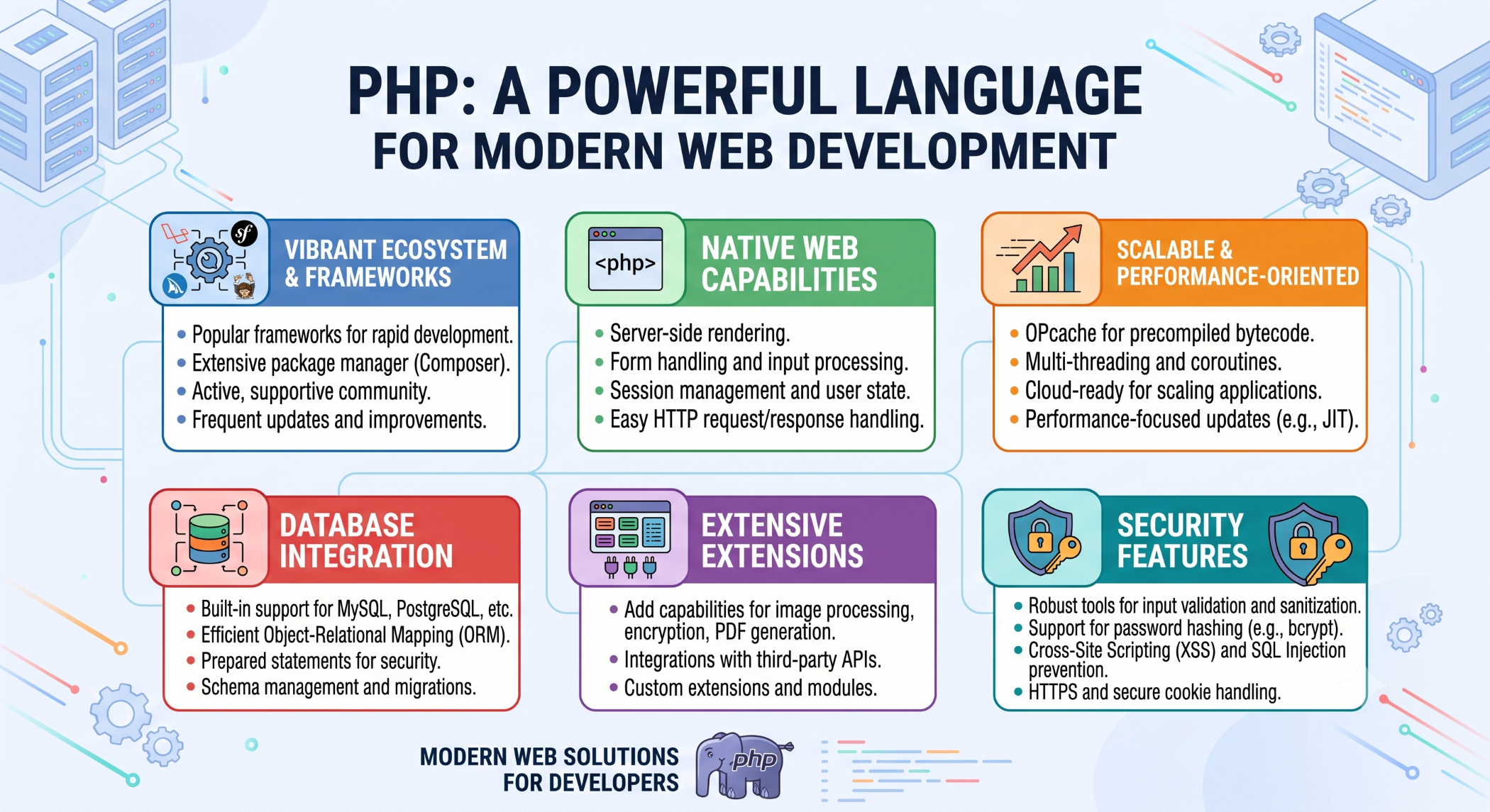
PHP has been used in web development for decades and has a large ecosystem of frameworks, libraries, tools, and developers.
It can be used to build:
- Business websites
- E-commerce platforms
- Content management systems
- Customer portals
- REST APIs
- SaaS applications
- Custom business software
PHP and Databases
Database integration is a major part of many PHP applications.
PHP applications can work with relational databases such as MySQL to store information including users, products, orders, content, and application settings.
For example:
$query = "SELECT id, name FROM users WHERE status = 'active'";A well-designed database structure combined with optimized queries is important for application performance.
PHP Frameworks
Frameworks provide reusable structures and tools that make application development more organized.
Popular PHP frameworks include:
Laravel
CodeIgniter
Symfony
Yii
CakePHP
Framework selection should depend on the project's requirements, existing architecture, development team's expertise, and long-term maintenance needs.
Advantages of PHP
PHP offers several practical benefits for web development.
Flexible Development
PHP can be used for projects ranging from small websites to complex business applications.
Large Ecosystem
Developers have access to frameworks, packages, libraries, documentation, and community resources.
Database Support
PHP works with a wide range of database technologies and supports common application architectures.
Cost-Effective Development
PHP is open source, and businesses can build solutions without paying for a proprietary language license.
PHP for Business Applications
PHP can support many business requirements, including e-commerce, customer portals, workflow systems, content management, and API integrations.
Solace Infotech provides PHP development capabilities for custom web applications, APIs, CMS solutions, e-commerce, cloud solutions, and product development. (solaceinfotech.com)
PHP Performance and Security
Good PHP development requires more than writing functional code.
Developers should optimize database queries, reduce unnecessary processing, use caching appropriately, monitor server resources, validate input, protect authentication, and keep PHP and application dependencies maintained.
Performance and security should be considered throughout the application lifecycle.
PHP Best Practices
Use modern and supported PHP versions, keep dependencies updated, follow a consistent coding structure, and separate business logic from presentation.
Use prepared statements or appropriate database abstractions when working with user-provided data, and never trust input received directly from a client.
Conclusion
PHP remains a practical technology for developing websites, APIs, e-commerce platforms, and custom business applications.
Its flexibility, mature ecosystem, database support, and extensive framework options make it suitable for many types of projects. The quality of a PHP solution ultimately depends on architecture, development practices, security, performance, and the expertise of the development team.