What Is Web Development?
Web development refers to the process of creating, deploying, and maintaining websites and web applications that operate over the internet or an intranet.
It can range from a simple informational website to complex applications such as e-commerce platforms, customer portals, social applications, enterprise systems, and data-driven business applications.
Modern web development generally involves three major areas: client-side development, server-side development, and database technology. Solace Infotech describes web development in similar terms and provides services covering custom websites, CMS platforms, frontend development, data-driven applications, backend systems, API integrations, and e-commerce applications.
Why Web Development Matters for Businesses
A website is often one of the first digital touchpoints between a business and its customers.
However, modern web development goes far beyond creating an online presence. A well-designed web application can automate business processes, enable online transactions, provide self-service functionality, connect different business systems, and deliver valuable information to customers and employees.
For example, an organization could use a web application for customer registration, online bookings, order management, reporting, payment processing, document management, or employee workflows.
The technology should support the business objective rather than simply provide a collection of technical features.
Website Development vs Web Application Development
A website is generally created to provide information or content to visitors.
A web application typically provides interactive functionality and allows users to perform specific tasks.
A corporate website may contain information about services, products, company history, and contact details. An online customer portal, on the other hand, may allow users to log in, view information, submit requests, make payments, download documents, or track activity.
The complexity of development depends on the application's requirements, user roles, integrations, data, security, and expected scale.
Major Components of Web Development
Frontend Development
Frontend development covers the part of a website or web application that users see and interact with.
It includes layouts, navigation, forms, buttons, animations, dashboards, responsive interfaces, and other user interactions.
Common frontend technologies include HTML, CSS, JavaScript, and modern frameworks such as React, Angular, and Vue.js.
A strong frontend should not only look attractive but also provide intuitive navigation and consistent behavior across supported devices and browsers.
Backend Development
Backend development handles the application logic that runs behind the user interface.
It can include authentication, business rules, database operations, APIs, file processing, integrations, notifications, and other server-side functionality.
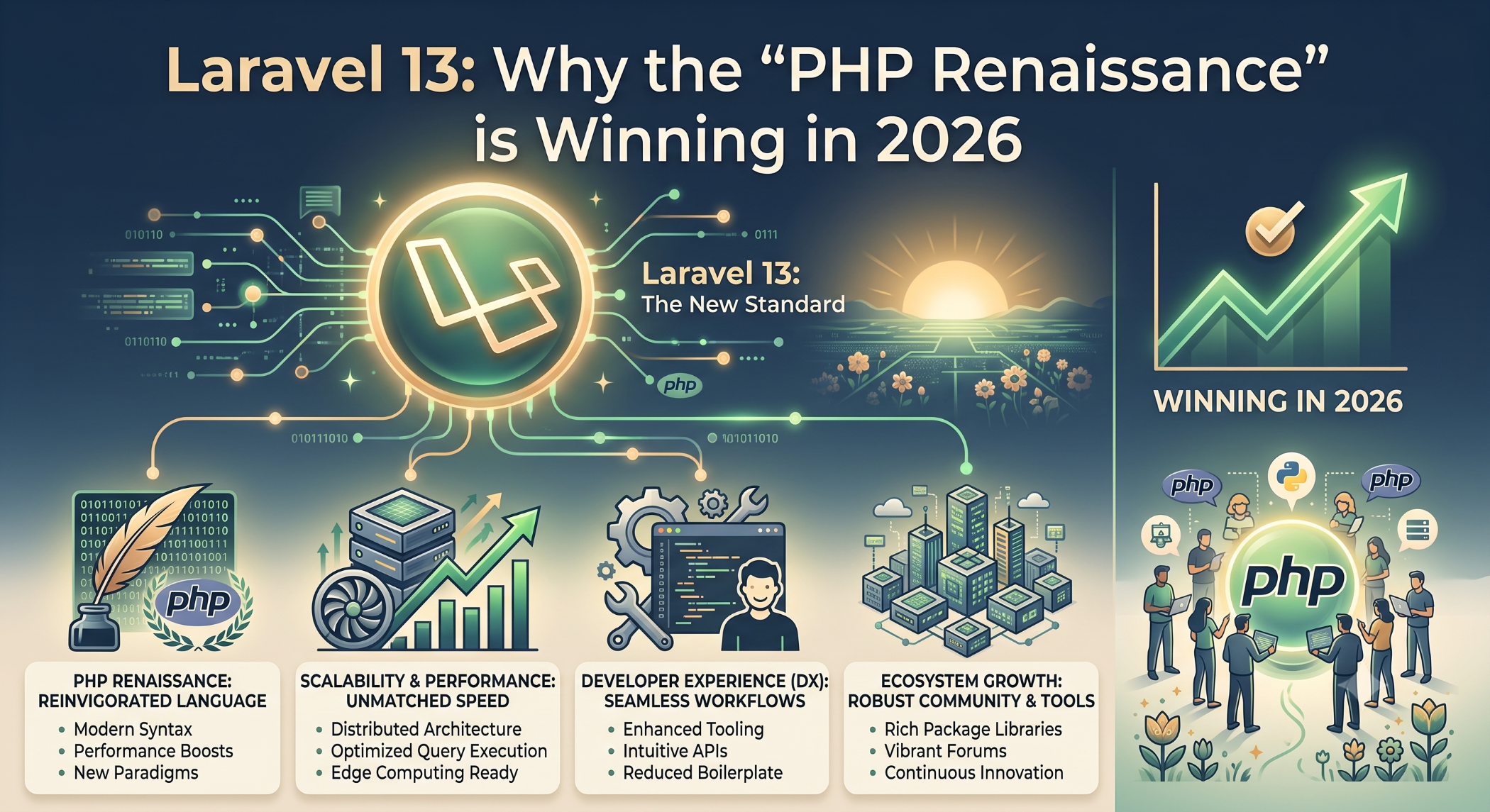
Technologies such as PHP, Laravel, Node.js, Python, and .NET can be used for backend development depending on the project requirements.
The backend should be designed for reliability, security, maintainability, and appropriate scalability.
Database Development
Most modern web applications need to store and retrieve information.
Databases can contain customer records, products, transactions, orders, documents, application settings, and other business information.
Database design should consider data relationships, indexing, query performance, integrity, security, backups, and expected growth.
A poorly designed database can become a major source of performance and maintenance problems as an application grows.
API Development and Integration
Modern applications commonly communicate with other systems through APIs.
An application may need to integrate with payment gateways, CRM systems, accounting platforms, shipping providers, communication services, maps, analytics platforms, or mobile applications.
Well-designed APIs provide a structured way for applications to exchange data and functionality.
API security should also be considered carefully through authentication, authorization, validation, rate limiting, monitoring, and appropriate error handling.
Types of Web Development
Web development can support many different types of projects.
Corporate websites help businesses establish an online presence and communicate their services.
E-commerce websites allow businesses to sell products or services online.
Content management systems allow teams to publish and manage digital content.
Customer portals provide users with secure access to personalized information and services.
Enterprise web applications support complex business processes and internal operations.
SaaS platforms provide software functionality through a web-based interface.
Data-driven applications process and present information for customers, employees, or business decision-makers.
Custom Web Development
Not every business can meet its requirements using a standard website or software product.
Custom web development allows the application to be built around specific business workflows and requirements.
Solace Infotech states that its web development work includes website and application customization, along with custom backend systems and API integrations.
A custom application can be designed around specific user roles, approval processes, business rules, integrations, and reporting requirements.
Choosing the Right Technology
There is no single technology stack that is appropriate for every web project.
Technology selection should consider application complexity, expected traffic, performance, security, integrations, development expertise, maintenance requirements, budget, and long-term goals.
For example, a content-focused website may have very different requirements from a high-volume SaaS platform or an enterprise application.
A technology partner should therefore recommend technologies based on the actual requirements instead of selecting a framework simply because it is currently popular.
Responsive Web Development
Users access websites from desktops, laptops, tablets, and smartphones.
Responsive web development allows an interface to adapt to different screen sizes and devices.
A responsive application should maintain readable content, usable navigation, appropriately sized controls, and consistent functionality across supported devices.
Testing different screen sizes and browsers is an important part of delivering a reliable user experience.
Web Development and User Experience
A technically strong application can still fail if users find it difficult to understand or use.
User experience should therefore be considered throughout development.
A good experience includes logical navigation, clear information architecture, accessible forms, useful feedback messages, appropriate error handling, and efficient workflows.
For business applications, reducing the number of unnecessary steps can make an important difference to user productivity.
Web Application Security
Security should be integrated into the development lifecycle.
Web applications may process customer information, credentials, financial information, business data, or other sensitive content.
Security practices can include secure authentication, authorization, input validation, encrypted communication, secure session management, dependency updates, access controls, logging, monitoring, and security testing.
Developers should also pay attention to common application vulnerabilities and ensure that security requirements are considered during architecture and development.
Website Performance
Performance directly affects user experience.
Slow pages and inefficient applications can frustrate users and may affect business processes.
Performance can depend on several factors, including:
Frontend resources: Large images, excessive JavaScript, and inefficient browser processing can affect page loading.
Backend processing: Inefficient application logic can increase response times.
Database queries: Poorly optimized queries can become a major bottleneck.
Infrastructure: Inadequate computing resources or poor configuration can affect application responsiveness.
Network communication: Excessive API requests or large payloads can increase latency.
Performance optimization should therefore be considered as part of architecture rather than only after problems appear.
Scalability
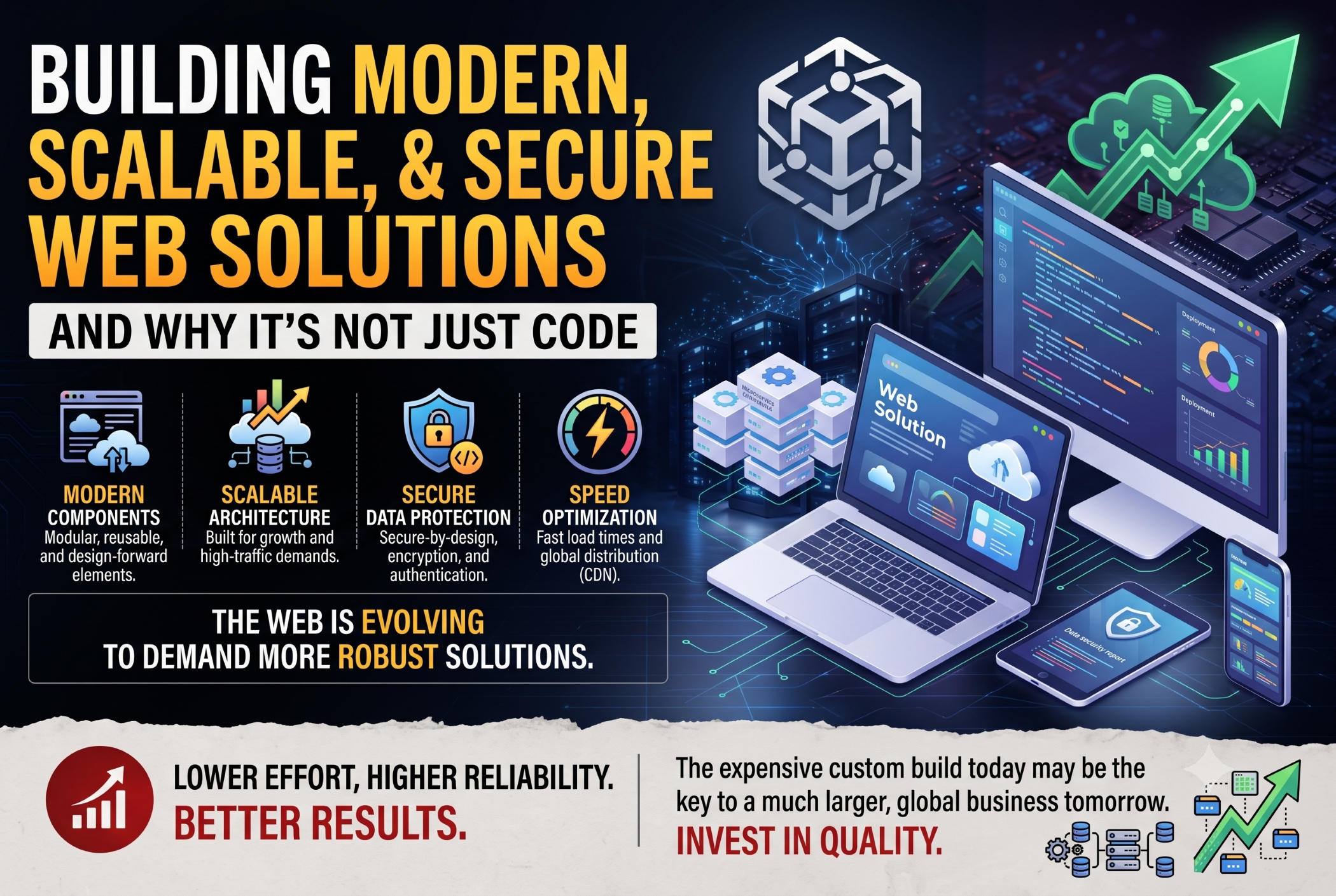
A web application should be capable of handling realistic increases in users, traffic, and data.
Scalability can involve efficient database design, caching, load balancing, asynchronous processing, optimized APIs, cloud infrastructure, and modular architecture.
Not every project needs a highly distributed architecture from the beginning. The appropriate solution depends on actual business requirements and expected growth.
E-Commerce Web Development
E-commerce development requires careful attention to both functionality and reliability.
An online store may require product catalogs, search, filters, shopping carts, checkout, payment integration, order management, inventory synchronization, shipping integration, customer accounts, and reporting.
Security and performance are particularly important because the application directly supports commercial transactions.
A well-designed e-commerce platform should provide a smooth customer journey from product discovery through checkout and post-purchase services.
CMS Development
A content management system allows businesses to create and manage website content through a structured interface.
CMS platforms can be useful when business users need to regularly update pages, blogs, images, products, or other content without requiring developers for every change.
The choice of CMS should consider content requirements, customization, security, integrations, performance, and long-term maintenance.
Web Development for Enterprise Applications
Enterprise web applications can support complex business processes across multiple departments.
They may involve role-based access, approval workflows, reporting, integrations with existing systems, large datasets, audit trails, and advanced security requirements.
Enterprise development therefore requires careful architecture and project planning.
The development process should consider not only functionality but also operational reliability, maintainability, security, and future expansion.
Web Development and Cloud Computing
Cloud platforms can provide infrastructure for hosting and scaling web applications.
Depending on the requirements, businesses may use cloud services for application servers, databases, file storage, networking, monitoring, backups, and other infrastructure components.
Cloud architecture can also support automated deployments and flexible resource management.
However, moving an application to the cloud does not automatically make it scalable or secure. Architecture and configuration still need to be designed appropriately.
Web Development and Artificial Intelligence
AI is becoming increasingly relevant to web applications.
Businesses can integrate AI features for customer support, document processing, search, recommendations, data classification, content assistance, automation, and analytics.
For example, a customer portal could use AI to help users find relevant information, while an enterprise application could extract information from uploaded documents and automatically populate business records.
AI should be integrated around a specific business use case, with appropriate validation, security, and human oversight.
Agile Web Development
Web projects frequently evolve during development.
Stakeholders may provide feedback after reviewing working functionality, or business priorities may change as the market develops.
An iterative approach allows teams to develop and validate functionality in smaller increments.
Regular communication, demonstrations, testing, and feedback can help identify misunderstandings before they become expensive to correct.
Testing and Quality Assurance
Testing should be part of the development process rather than an activity performed only immediately before launch.
Testing can cover functionality, usability, APIs, databases, security, performance, browser compatibility, responsive layouts, and critical user journeys.
Automated tests can also help identify regressions when existing applications are modified.
Quality assurance provides an additional layer of confidence before functionality reaches customers.
Deployment and Maintenance
Deployment is an important part of web development.
Applications need appropriate environments, configuration, domain and DNS setup, databases, certificates, backups, monitoring, and release procedures.
After launch, websites and applications require ongoing maintenance.
Maintenance may include security updates, bug fixes, performance improvements, dependency updates, infrastructure management, and new functionality.
Solace Infotech describes its web development capabilities as including architecture, development, automation, and ongoing maintenance of web processes and applications.
How to Choose a Web Development Company
Choosing a web development partner requires more than comparing prices.
Consider the company's experience with similar applications, technology capabilities, development methodology, QA practices, communication process, security approach, and post-launch support.
It is also useful to understand who will work on the project and how responsibilities will be managed.
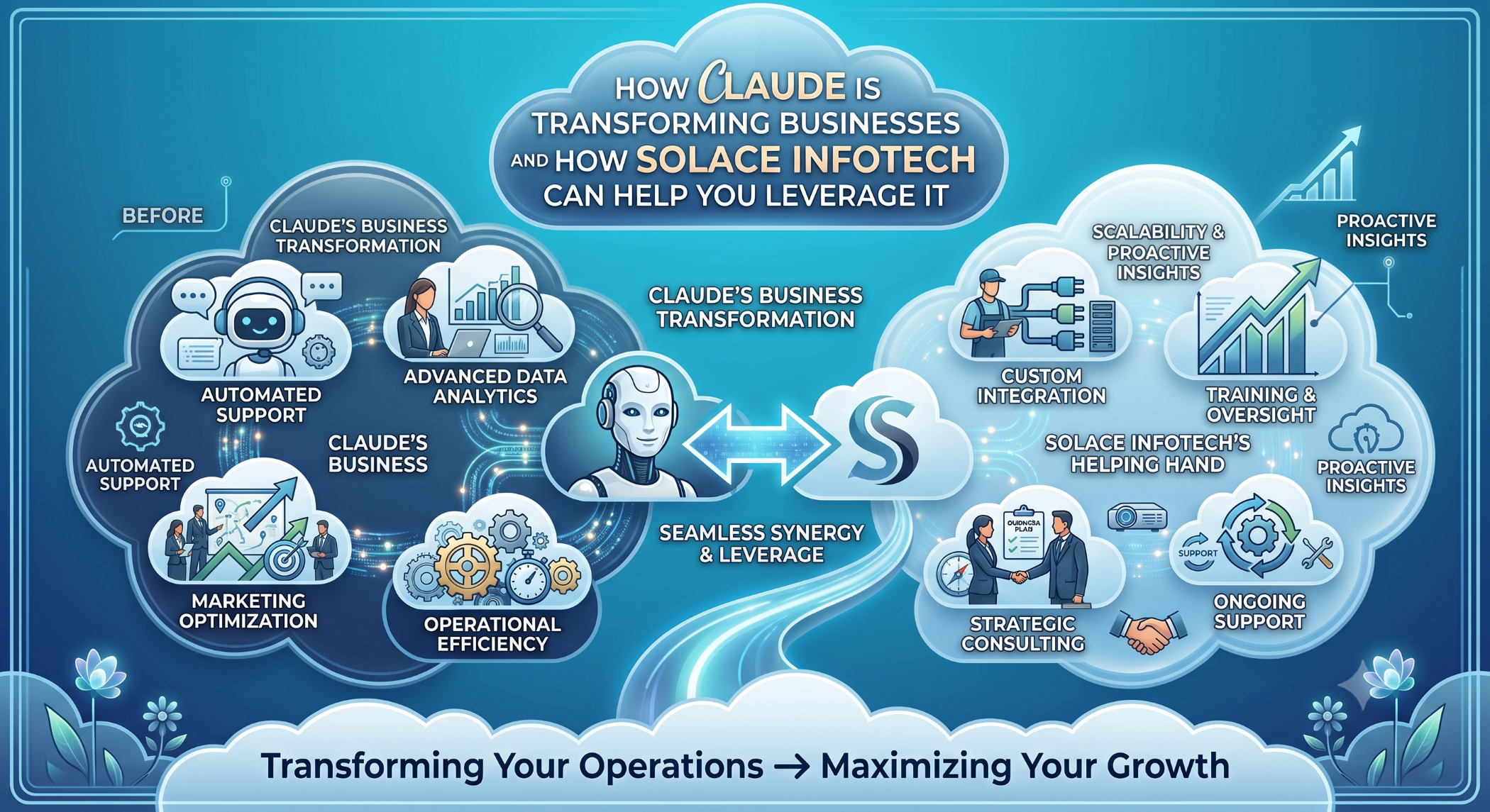
Solace Infotech describes a dedicated-team model where clients define the required expertise, the development team is allocated, a project manager supports the engagement, and the team can scale according to project requirements.
Common Web Development Mistakes
One common mistake is starting development before business requirements are clearly understood.
Another is selecting technology without considering long-term maintenance and scalability.
Ignoring security until the end of development can create significant technical and business risks.
Poor communication can also lead to mismatched expectations between clients and development teams.
Another frequent issue is building too many features before validating the core user workflow.
A structured development process can help reduce these risks.
Future of Web Development
Web development continues to evolve alongside cloud computing, artificial intelligence, automation, real-time applications, and modern frontend technologies.
The role of web applications is also expanding. Businesses increasingly use them not only as public-facing websites but as core platforms for operations, customer engagement, data management, and digital services.
The fundamental objective remains the same: use appropriate technology to create reliable, secure, useful, and maintainable digital experiences.
How Solace Infotech Can Help
Solace Infotech provides web development capabilities across custom websites, CMS solutions, frontend development, data-driven applications, backend systems, API integrations, and e-commerce applications.
Its broader technology capabilities also include custom application development, software product engineering, AI, digital transformation, and dedicated development teams.
A successful web development engagement should begin with the business objective, followed by requirements analysis, technology selection, architecture, development, testing, deployment, and continuous improvement.
Conclusion
Web development is much more than creating a website.
Modern web development can help businesses build customer-facing experiences, automate processes, integrate systems, manage information, support online transactions, and create entirely new digital products.
Successful development requires a combination of thoughtful architecture, appropriate technologies, good user experience, strong security, reliable testing, and ongoing maintenance.
Whether the requirement is a simple corporate website, an e-commerce platform, a customer portal, or a complex enterprise application, the right development approach should be determined by the business problem and the expected outcome.
When business requirements and technology are aligned from the beginning, web development can become a powerful foundation for digital transformation and sustainable business growth.