Website Vs Web App Which One Is Best For Your Business
In today's digital landscape, businesses often face an important question: Should we build a website or a web application? While both are accessed through a web browser, they serve different purposes and support different business objectives.
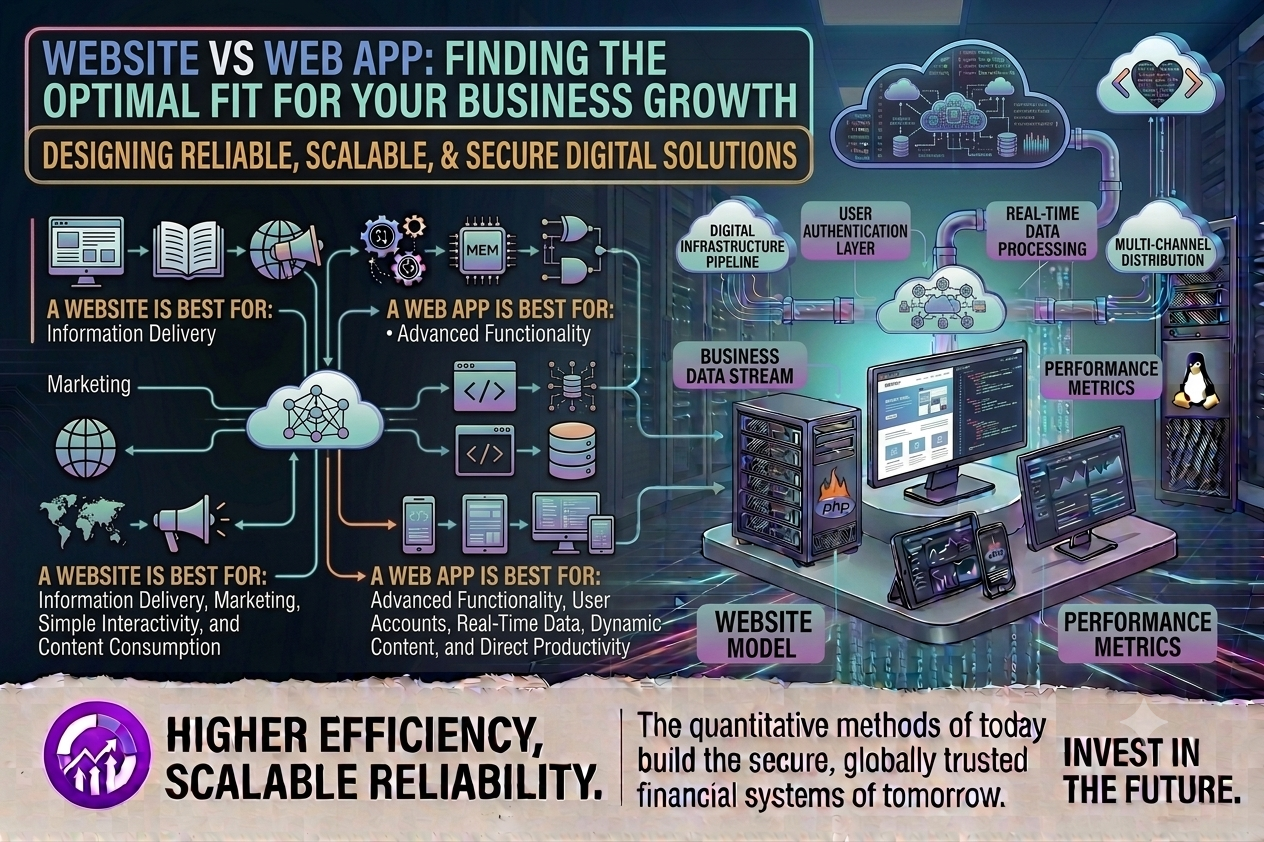
A website is primarily designed to provide information, build brand awareness, and generate leads. A web application is designed to allow users to perform tasks, interact with data, and complete workflows. Understanding these differences can help businesses make the right investment decision.
What Is a Website?
A website is a collection of web pages that provide information about a company, product, service, or topic.
Common business website features include:
Home page
About Us page
Service pages
Blog section
Contact forms
Portfolio or case studies
Landing pages
The primary goal of a website is to inform visitors, improve online visibility, and convert visitors into potential customers.
What Is a Web Application?
A web application is software that runs within a web browser and allows users to interact with data and perform specific actions.
Examples include:
CRM systems
Customer portals
Project management platforms
Online booking systems
Learning management systems
SaaS products
Inventory management systems
Business dashboards
Unlike websites, web applications usually include user accounts, databases, business logic, and personalized experiences.
Website vs Web App: Key Differences
Feature Website Web Application
Primary Purpose Share information Perform tasks and workflows
User Interaction Limited Extensive
User Accounts Optional Usually required
Data Storage Minimal Significant
Personalization Limited High
Development Complexity Lower Higher
Maintenance Content updates Ongoing development and security
SEO Focus Very important Usually secondary for private areas
Cost Lower Higher
When Your Business Needs a Website
A website is often the right choice when your goal is:
Brand Visibility
Businesses need a professional online presence where customers can learn about services and products.
Lead Generation
Service providers, agencies, consultants, healthcare providers, and local businesses often rely on websites to generate inquiries.
Content Marketing
Blogs, articles, case studies, and educational content can help improve search engine visibility and attract potential customers.
Business Credibility
Customers frequently visit websites before making purchasing decisions. A professional website helps establish trust and credibility.
A website is generally sufficient when users primarily need information rather than functionality.
When Your Business Needs a Web Application
A web application becomes necessary when users need to interact with the system.
Customer Portals
Customers can log in, view information, manage subscriptions, track orders, or access services.
Business Process Automation
Organizations can automate workflows such as approvals, reporting, scheduling, and operational processes.
Data Management
Businesses that manage customer records, transactions, projects, or inventory often require application functionality.
SaaS Products
If the software itself is the product being sold, a web application is required.
Examples include project management tools, CRM systems, analytics platforms, and marketplace solutions.
Many Businesses Need Both
In many cases, the answer is not website or web application—it is both.
For example:
Public Website
Used for:
SEO
Marketing
Content publishing
Lead generation
Brand building
Web Application
Used for:
Customer accounts
Dashboards
Transactions
Internal operations
Service delivery
Many successful businesses separate their marketing website from their application platform while maintaining a consistent user experience.
Cost Considerations
Website Development
Websites generally require:
UI/UX design
Frontend development
Content management
SEO optimization
Development timelines are usually shorter and costs are generally lower.
Web Application Development
Web applications often require:
Backend development
Database architecture
Authentication systems
API integrations
Security implementation
User management
Testing and maintenance
As a result, web applications typically require larger investments and longer development timelines.
Questions to Ask Before Choosing
Before starting development, consider the following questions:
Do users need to log in?
Will users create or manage data?
Do you need dashboards or reporting?
Is SEO a major requirement?
Will customers perform transactions online?
Do you need workflow automation?
Is the platform a business tool or a marketing channel?
What is your available budget?
What are your long-term growth plans?
Will you eventually need both solutions?
Answering these questions can help determine the most suitable approach for your business.
Benefits of a Website
Faster development
Lower investment
Better SEO opportunities
Improved online presence
Lead generation
Easier content management
Brand credibility
Benefits of a Web Application
Process automation
Personalized user experiences
Operational efficiency
Data management
Scalability
Customer self-service
Competitive advantage
Conclusion
Choosing between a website and a web application depends on your business objectives rather than technology trends. If your primary goal is visibility, lead generation, content marketing, and brand awareness, a website is usually the right choice. If users need accounts, workflows, dashboards, transactions, or personalized functionality, a web application becomes necessary.
Many growing businesses eventually benefit from having both—a website to attract customers and a web application to serve them. The best approach is to align technology decisions with your business goals, customer expectations, and future growth strategy.